by Kathleen Lynch | Mar 2, 2016 | Entrepreneurship, Innovation, Start Up Considerations, Trademark Service Mark
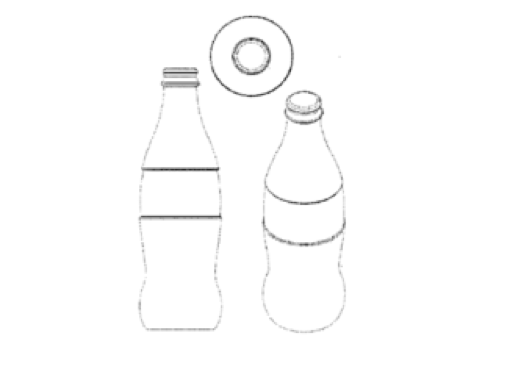
A European General Court recently denied the Coca-Cola Company European Community trademark protection for the shape of its new bottle design. European Community trademark protection provides trademark rights to the owner throughout all European Union member states.
The bottle design was determined by the court to lack distinction. In fairness, protection of a shape in the EU is difficult to prove. The shape must be shown to be recognizable by consumers by shape alone. Coke failed to meet its burden of proof in this situation.
Here, Coke revamped its bottle design and made it less distinctive than previous designs, which were protected by EU Community trademark registration. In an effort to modernize their product packaging, Coke may have drifted away from its recognizable bottle shape.
What’s the take away here? For any company, protecting the shape of a product through trademark registration is a challenge. The shape must be sufficiently distinctive to enable consumers to recognize the product over the competition. If your organization is going to go down that route, be sure to create a sufficiently distinctive product that is recognizable by your customers over the competition.
Protecting your innovative developments is critical to any organization. Having the right person to help you make that decision is important. The Law Office of Kathleen Lynch PLLC is designed to help businesses such as yours keep ahead of the game. The first telephone consultation is free. Email us at [email protected].

by Kathleen Lynch | Feb 23, 2016 | IP Management, Patent Prosecution
In Transweb LLC v. 3M Innovative Properties Company & 3M Company, the Federal Circuit Court of Appeals affirmed the district court’s finding that 3M was liable for antitrust violations in that 3M was found to have obtained its patent through inequitable conduct and subsequently sought to enforce the patent. As a result of 3Ms behavior in both acquiring and enforcing the patent, the appellate court awarded treble attorneys’ fees which came to about $26 million.
The patents at issue focus on filter material used in respirators for construction workers etc. Transweb had developed a new filter material similar to the 3M subject patents. The Federal Circuit found the 3M patents were invalid based on evidence indicating that Transweb’s president distributed samples of their new filter material at a trade show more than a year before 3M filed patent applications covering their new filter material. The finding of inequitable conduct was confirmed because the evidence indicated 3M knew of Transweb’s prior distribution, and did not properly disclose it to the US Patent and Trademark Office as required.
The court then found that 3M’s enforcement of their patent against Transweb constituted an antitrust violation as an abuse of the legal process and awarded Transweb’s attorneys’ fees for defending against 3M’s lawsuit. In justifying the award, the court stated that the attorneys fees were appropriate because they flowed directly from “3M’s unlawful act [of] bringing suit based on a patent known to be fraudulently obtained.” In awarding treble attorneys’ fees, the court indicated that the enhanced award was justified because the suit brought by 3M forced Transweb to either cease competition in the market or expend money to defend itself.
What’s the take away here? When preparing and prosecuting a patent application, ensure that your organization meets all requirements with regarding to disclosure to the US Patent Office. This requires diligence and educating all involved in the process. Sometimes that can include sales, marketing, and business development personnel as well as R&D and manufacturing.
Protecting your innovative developments is critical to any organization. Having the right person to help you make that decision is important. The Law Office of Kathleen Lynch PLLC is designed to help businesses such as yours keep ahead of the game. The first telephone consultation is free. Email us at [email protected].

by Kathleen Lynch | Feb 16, 2016 | Trademark Service Mark
If you want to be a superhero, you’re going to have to create your own logo. In a recent California court case, DC Comics v. Mad Engine, Inc., the court refused to dismiss an action brought by DC Comics against Mad Engine for trademark infringement. Mad Engine was selling t-shirts with a “dad” logo in red and yellow on a blue shirt. The logo was a five-sided shield similar is style to the Superman “S” that appears in DC Comics books and movies.
Mad Engine asked the court to dismiss the lawsuit on the basis that the “dad” logo was a parody of the Superman logo. The court rejected the argument and the case now moves on to trial.
What’s the take away here? Even if you think your mark is a parody of another mark. The owner of the other mark may not share your sense of humor. Think twice before proceeding with a mark like that.
Protecting your innovative developments is critical to any organization. Having the right person to help you make that decision is important. The Law Office of Kathleen Lynch PLLC is designed to help businesses such as yours keep ahead of the game. The first telephone consultation is free. Email us at [email protected].
As an aside, I’ll be speaking on Thursday, February 18th at the NC Bar Association Business Law Section Annual Meeting on a panel discussion of IP issues in Pinehurst NC. Anyone thinking of attending, I hope you do as it is shaping up to be an interesting program. I’ll also be there on behalf of NCLEAP (North Carolina Lawyer Entrepreneur’s Assistance Program) recruiting new volunteers. If you’re there, please come and say “hello”.

by Kathleen Lynch | Feb 12, 2016 | Intellectual Property
A recent Federal Circuit Court of Appeals decision highlights the need to ensure that contracts with third parties ensure that any intellectual property developed is owned by the company. In TriReme Med., LLC v. AngioScore, Inc., TriReme sued to correct inventorship on some AngioScore patents directed to angioplasty balloon catheters. AngioScore had hired a consultant, Dr. Lotan. Dr. Lotan was not named as an inventor in any of the AngioScore patents at issue. TriReme, motivated by a concern that AngioScore may sue for patent infringement, acquired from Dr. Lotan, all of his interest in the subject AngioScore patents.
AngioScore offered up the consulting agreement executed with Dr. Lotan in defense. AngioScore asserted that it obtained all rights in all inventive works by Dr. Lotan.
The Federal Circuit disagreed. The court found that the agreement did not give AngioScore rights to Dr. Lotan’s inventions developed or made prior to the agreement and remanded the case back to district court to determine whether the language in the agreement grants AngioScore rights in any inventive developments made by Dr. Lotan after that execution of the agreement.
What’s the take away here? When contracting with any third party, be sure to cover all aspects of ownership of any intellectual property developed during the term of the agreement. Also ensure that all parties to the agreement have a clear understanding as to who is entitled to what when dealing with IP developed by the third party either before or after the term of the agreement.
Protecting your innovative developments is critical to any organization. Having the right person to help you make that decision is important. The Law Office of Kathleen Lynch PLLC is designed to help businesses such as yours keep ahead of the game. The first telephone consultation is free. Email us at [email protected].

by Kathleen Lynch | Feb 2, 2016 | Trade Secrets
On January 28, 2016, the Senate Judiciary Committee approved the Defend Trade Secrets Act. If the bill is made into law, it would create a cause of action in federal court for theft of trade secrets.
Most recent changes to the bill included issues relating to employee mobility, the statute of limitations, restrictions on seizure orders, and enhanced damages. The Committee adopted language that provides immunity for whistleblowers to protect employees or others from potential trade secret claims if they present information confidentially to relevant government officials or agencies in connection with a violation of law. The bill, S. 1890, now moves to the full Senate for consideration.
What is the take away here? If a federal trade secrets bill is passed, qualifying companies and individuals can use the federal court system to bring theft of trade secret actions or other trade secret causes of action against an alleged party. In addition, the federal trade secrets law, where applicable, would provide a unified and harmonized body of law where each of the 50 states has full authority in this area of law at present and not all of the states’ laws on trade secret matters are unified.
In addition, there are an increasing number of trade secret cases where the defendant is a foreign individual or entity. The federal laws in this matter would aid in bringing these parties into court and having greater strength to administer the court’s punishment. Finally, because federal courts presently handle all other aspects of intellectual property law: patents, trademarks and copyright, it is appreciated that the federal judiciary may be better equipped to handle trade secret cases as well. We will continue to keep an eye on this subject.
Protecting your innovative developments is critical to any organization. Having the right person to help you make those decisions is important. The Law Office of Kathleen Lynch PLLC is designed to help businesses such as yours keep ahead of the game. The first telephone consultation is free. Email us at [email protected].
Page 3 of 17«12345...10...»Last »