
by Kathleen Lynch | Apr 28, 2026 | Confidentiality, Entrepreneur, Entrepreneurship, Intellectual Property, IP, IP Management, Trade Secrets
Recently, the U.S. Court of Appeals for the Federal Circuit issued a significant reversal of a California district court’s finding of trade secret misappropriation. In the case of International Medical Devices, Inc. (IMD) v. Cornell (April 2026), the court ruled that no reasonable jury could have found several alleged trade secrets to be, in fact, “secrets.”
The Dispute: Cosmetic Penile Implants
The litigation centered on the Penuma® cosmetic penile implant. The plaintiffs alleged that four specific elements of their technology were stolen trade secrets:
- Structural Pockets: Internal voids within the implant to enhance softness and elasticity.
- Mesh Tabs: Components around the distal tip to facilitate tissue ingrowth.
- Absorbable Sutures: Used in combination with mesh tabs to hold the implant during initial healing.
- The “Supply List”: A specific list of materials and instruments used to perform the surgical implantation.
The “Death” of a Trade Secret: Public Disclosure
The Federal Circuit held that the first three alleged secrets (the structural design elements) were ineligible for protection because they had already been disclosed in prior patents.
Citing the precedent in Atl. Rsch. Mktg. Sys., Inc. v. Troy, 659 F.3d 1345, the court reaffirmed a fundamental rule of intellectual property:
“A trade secret is secret, a patent is not. That which is disclosed in a patent cannot be a trade secret.”
Because these design concepts appeared in public patent filings—some dating back decades—they were part of the public domain. You cannot claim “secrecy” over information that the government has already published for the world to see.
The Failure of Internal Protection
The fourth alleged trade secret—the list of surgical instruments—failed for a different reason: lack of reasonable efforts to maintain secrecy.
The plaintiffs had emailed this list to the defendant without any:
- Confidentiality caveats
- “Trade Secret” labels
- Explicit instructions on restricted handling
Under the California Uniform Trade Secrets Act (CUTSA), information only qualifies as a trade secret if the owner takes active, reasonable steps to keep it secret. Because the plaintiffs treated the list as ordinary correspondence in the past, they could not retroactively claim it was a protected secret during litigation.
The Takeaway: How to Protect Your Innovation
This case serves as a vital reminder for tech and medical device companies: If you have a trade secret, keep it that way.
- Audit Your Patents: Ensure you aren’t trying to protect information as a “secret” if it’s already described in your (or someone else’s) patent filings.
- Use NDAs Every Time: Never disclose sensitive information to an outside individual or organization without a signed Non-Disclosure Agreement (NDA).
- Label Everything: Mark confidential documents clearly as “Trade Secret”, “Proprietary” or “Confidential.”
- Need-to-Know Access: Limit employee access to sensitive data and provide regular training on internal security protocols.
Protect Your Innovation
Protecting your intellectual property is critical to the survival of any organization. In an evolving legal landscape, having the right counsel to navigate these decisions is more important than ever.
The Law Office of Kathleen Lynch PLLC is designed to help your business stay ahead of the game.
Your first consultation is free. Email us: kl****@*****aw.com
by Kathleen Lynch | Apr 21, 2026 | Entrepreneur, Entrepreneurship, Innovation, Intellectual Property, International, Invention, Inventor, IP, Logo, Patent, Protection, Service Mark, Trade Dress, Trade Name, Trade Secrets, Trademark, Uncategorized
Sunday, April 26th is World Intellectual Property Day. Established in 2000 by the World Intellectual Property Organization. (WIPO), this day serves a vital purpose: to pull back the curtain on the world of intellectual property (IP) and show how it shapes our daily lives.
This Year’s Theme: The Spirit of Sport
This year, we are shining a spotlight on the intersection of innovation and athletics. From cutting-edge equipment and game-changing technologies to the iconic brands that define our favorite teams, IP is the engine driving the sports industry forward.
We celebrate:
- The Creators & Inventors: Whose devotion leads to safer, faster, and more effective sports gear.
- The Storytellers: Whose copyrighted broadcasts preserve historic moments for generations.
- The Brands: The trademarks, logos, and colors that unite fans across the globe.
More Than Just a Game
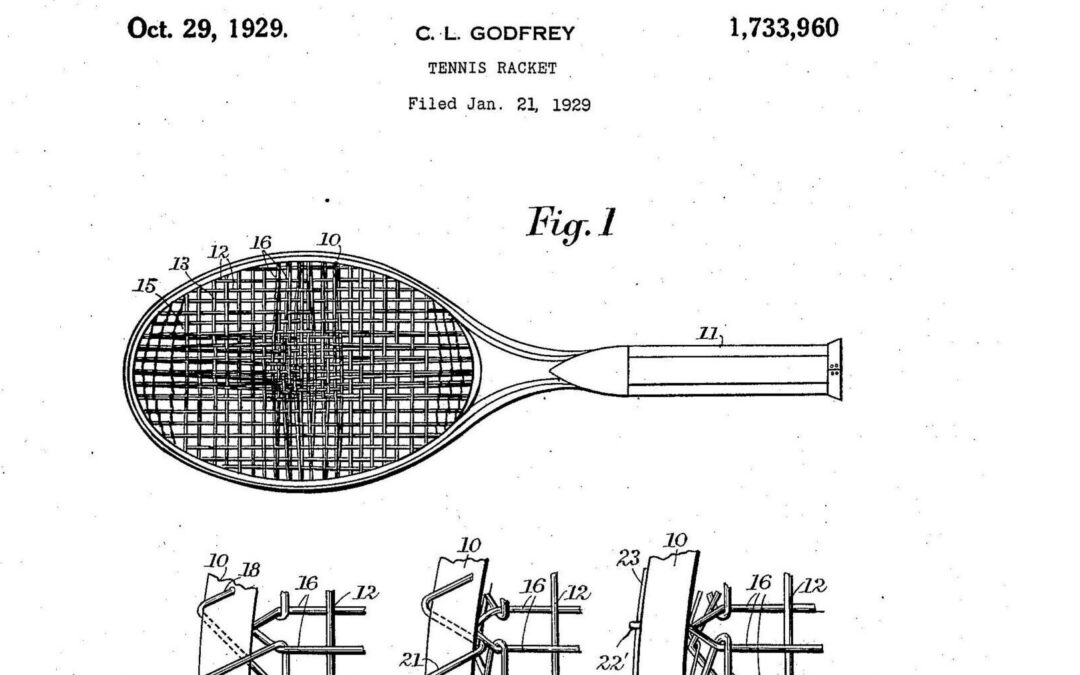
The next time you lace up your running shoes or pick up a tennis racquet, take a moment to consider the genius behind them. Whether it’s a patent for a new material, a design for aerodynamics, or a trade secret that gives a brand its edge, IP doesn’t just protect ideas—it enhances the way we play and live.
Is Your Innovation Protected?
Protecting your developments is critical to staying competitive. In a fast-moving market, having the right legal partner to navigate these decisions is the ultimate “home-field advantage.”
The Law Office of Kathleen Lynch PLLC is dedicated to helping businesses like yours keep ahead of the game.
Ready to protect your vision? Your first consultation is free. 📧 Email us today: kl****@*****aw.com

by Kathleen Lynch | Feb 2, 2016 | Trade Secrets
On January 28, 2016, the Senate Judiciary Committee approved the Defend Trade Secrets Act. If the bill is made into law, it would create a cause of action in federal court for theft of trade secrets.
Most recent changes to the bill included issues relating to employee mobility, the statute of limitations, restrictions on seizure orders, and enhanced damages. The Committee adopted language that provides immunity for whistleblowers to protect employees or others from potential trade secret claims if they present information confidentially to relevant government officials or agencies in connection with a violation of law. The bill, S. 1890, now moves to the full Senate for consideration.
What is the take away here? If a federal trade secrets bill is passed, qualifying companies and individuals can use the federal court system to bring theft of trade secret actions or other trade secret causes of action against an alleged party. In addition, the federal trade secrets law, where applicable, would provide a unified and harmonized body of law where each of the 50 states has full authority in this area of law at present and not all of the states’ laws on trade secret matters are unified.
In addition, there are an increasing number of trade secret cases where the defendant is a foreign individual or entity. The federal laws in this matter would aid in bringing these parties into court and having greater strength to administer the court’s punishment. Finally, because federal courts presently handle all other aspects of intellectual property law: patents, trademarks and copyright, it is appreciated that the federal judiciary may be better equipped to handle trade secret cases as well. We will continue to keep an eye on this subject.
Protecting your innovative developments is critical to any organization. Having the right person to help you make those decisions is important. The Law Office of Kathleen Lynch PLLC is designed to help businesses such as yours keep ahead of the game. The first telephone consultation is free. Email us at kl****@*****aw.com.

by Kathleen Lynch | Nov 18, 2015 | Trade Secrets
Trade secrets are supposed to be just that-secret. Trade secrets should be protected through agreement, limited access, marking as such. All of these efforts are adopted with a goal to keep proprietary information away from competitors. However, in one recent case, even though a company had gone through all the measures described above, the court still ruled them as no longer being secret.
In Fleetwood Packaging v. Hein, Fleetwood accused a former employee of its parent company, Signode Industrial Group, of stealing company trade secrets along with several important customers. The former employee had been discovered to have downloaded company confidential information, including contribution reports which included pricing information, and discounts. The court found the Fleetwood had attempted to protect its contribution reports through the execution of confidentiality agreements, limiting employee access to information and marking appropriate documents confidential. However, Fleetwood was also found to have shared this information with its customers! Because the customers were not part of Fleetwood any trade secret protection available was negated and the cause of action related to those reports was dismissed.
What’s the take away here? Treat your trade secrets as such-secret. Don’t share them with your customers or anyone else outside of your organization with a properly executed confidentiality agreement. Limit access to your proprietary information and monitor the access to detect any sudden and unauthorized or unnecessary downloads. In addition, be sure to mark all appropriate documents, including things such as white boards, demo products, etc. as “proprietary” or “confidential.”
Protecting proprietary information is critical to any organization. Having the right person to help you make those decisions is important. The Law Office of Kathleen Lynch PLLC is designed to help businesses such as yours keep ahead of the game. The first telephone consultation is free. Email us at kl****@*****aw.com.

by Kathleen Lynch | Apr 7, 2015 | Trade Secrets
As the mother of boys and an IP attorney, this story hit me in more ways than one. Four young men who were part of a computer hacking ring plead guilty to breaking into computer networks of technology companies and the U.S. Army and stealing more than $100 million in intellectual property and other data. One of the young men was 18 years old.
Allegations of the cyber theft included software and data related to the Xbox One gaming console and Xbox Live online gaming system; popular games such as “Call of Duty: Modern Warfare 3” and “Gears of War 3”; as well as software used to train military helicopter pilots.
The Assistant Attorney assigned to the case stated “the American economy is driven by innovation. But American innovation is only valuable when it can be protected. Today’s guilty pleas show that we will protect America’s intellectual property from hackers, whether they hack from here or from abroad.”
The ages of the other young men are 20, 22 and 28. The men were from the United States and Canada. The estimated value of the intellectual property and data that the defendants stole is between $100 million and $200 million. The United States has seized over $620,000 in cash and other proceeds related to the conduct.
So, don’t underestimate the value of your trade secrets or proprietary information. Do what you can to protect it. In addition, keep an eye on your kids!
Protecting proprietary information is critical to any organization. Having the right person to help you make those decisions is important. The Law Office of Kathleen Lynch PLLC is designed to help businesses such as yours keep ahead of the game. The first telephone consultation is free. Email us at kl****@*****aw.com.

by Kathleen Lynch | Feb 3, 2015 | Innovation, Patent, Trade Secrets
Unitherm Food Systems, a food process machinery manufacturer, recently discovered that you cannot seek both patent and trade secret protection for the same innovation. Unitherm filed an action in 2014 against Hormel for disclosing Unitherm’s trade secrets to a competitor. Unitherm’s alleged trade secret focused on a method for pre-cooking sliced bacon.
In 2007, both companies executed a joint development agreement for developing an oven that would produce high levels of steam for cooking. Under the agreement, Hormel would own all intellectual property. In 2008 Unitherm filed a patent application covering the process of cooking food at high steam levels. Hormel withdrew from the agreement with Unitherm and filed for patent protection in 2010 on its own method of cooking bacon. Unitherm alleged that the method claimed by Hormel was that developed by Unitherm during the course of the joint development agreement and was proprietary.
The court threw out Unitherm’s claim for misappropriating its trade secret. The judge told Unitherm that they could not maintain a trade secret on something for which they were seeking patent protection.
Take away: you can’t claim something as a trade secret if you are going to try to obtain patent protection for the same innovation. Best practice: first figure out what is the best avenue for protection for your innovation (i.e. patent, design patent, trade secret, etc.). Then, try to obtain that protection for your innovation to the greatest extent allowed by law.
Protecting your innovative developments is critical to any organization. Having the right person to help you make that decision is important. The Law Office of Kathleen Lynch PLLC is designed to help businesses such as yours keep ahead of the game. The first telephone consultation is free. Email us at kl****@*****aw.com.