
by Kathleen Lynch | Jun 3, 2026 | Entrepreneur, Entrepreneurship, Infringement, Innovation, Intellectual Property, Invention, IP, IP Management, Licensing, Litigation, Patent, Protection, Small Business, Start Up, Start Up Considerations, Uncategorized
Can you license your technology to another company and accidentally lose your right to sue copycats? According to a recent decision by the Federal Circuit Court of Appeals (CAFC), the answer depends entirely on how carefully you draft your contract.
In ALM Holding Company & Ergon Asphalt & Emulsions, Inc. v. Zydex Industries, the CAFC reversed a district court’s dismissal of a patent infringement suit, delivering a crucial reminder to businesses about the fine print of intellectual property licensing.
The Case: A Question of Standing
The plaintiffs brought a patent infringement lawsuit against Zydex, but the district court threw the case out before it could even begin. Why? The court determined that the plaintiffs lacked constitutional standing to sue.
The district court reasoned that because the plaintiffs had granted an exclusive license for the subject patents to a third party, they no longer suffered a direct “injury-in-fact” from infringement. Even though the plaintiffs had retained certain rights, the lower court believed they had signed away too much control to seek legal redress.
However, the plaintiffs had been careful to retain three specific powers in their licensing agreement:
- The right to sue for infringement.
- The right to approve all sublicenses.
- The right to approve any assignment of rights by the licensee.
The CAFC Decision: Keeping a “Non-Illusory” Interest
The CAFC reversed the dismissal and sent the case back to the district court.
The appellate court found that because the plaintiffs had retained the right to sue and control sublicenses, they kept a sufficient exclusionary interest in the patents. In short: they retained enough skin in the game to maintain standing for an infringement action.
The Takeaway for Businesses
A patent owner’s core power is the right to exclude others from making, using, selling, or offering to sell their invention. When entering into exclusive license agreements, licensors must be incredibly strategic. If you do not carefully retain specific enforcement and approval rights, you risk accidentally stripping your business of the legal standing required to defend your own technology.
Guard Your Innovations with Expert Counsel
Capitalizing on innovative developments is critical to your organization’s growth—but protecting those assets requires foresight.
The Law Office of Kathleen Lynch PLLC is designed to help businesses like yours stay ahead of the game and navigate complex IP landscapes. Don’t leave your licensing agreements to chance.
- Ready to protect your IP? Your first consultation is entirely free.
- Get in touch: Email us today at kl****@*****aw.com to schedule your strategy session.

by Kathleen Lynch | May 18, 2026 | Entrepreneur, Infringement, Innovation, Intellectual Property, Invention, Inventor, IP, Litigation, Patent, Patent Prosecution, Protection, Small Business, Start Up, Start Up Considerations, Uncategorized
This week, Actelion Pharmaceuticals (“Actelion”) failed in its effort to hold Mylan Pharmaceuticals (“Mylan”) liable for infringing its patents on a highly successful hypertension drug, Veletri®. The Federal Circuit’s decision serves as a stark reminder to businesses everywhere: in the world of intellectual property, omitting a single technical detail can cost you a monopoly.
The Dispute: A Battle Over a Generic Alternative
Actelion holds patent protection for Veletri, a life-saving drug used to treat pulmonary arterial hypertension. Seeking to enter the market with a lower-cost generic version, Mylan filed an Abbreviated New Drug Application (ANDA) with the FDA, asserting that its generic product did not infringe Actelion’s intellectual property. Actelion promptly sued Mylan in federal court, asserting infringement of two patents covering the formulation process.
The entire case ultimately hinged on a single chemical metric: pH measurement.
The Flaw: The Missing Temperature Parameter
Actelion’s patent claims focused heavily on a specific requirement: the drug must be formulated from a bulk solution having a “pH of 13 or higher.” The issue at trial was how that pH should be measured. In chemistry, a solution’s pH fluctuates based on environment—specifically, temperature. However, Actelion’s patent specification failed to provide any explicit instructions on the temperature conditions required for taking the measurement.
Because the patent was silent, the court turned to standard industry practices. Generally, unless a scientist indicates otherwise, pH is measured at standard room temperature. When Mylan’s product is measured at room temperature, its pH is well below 13, meaning it does not literally infringe the patent.
Actelion attempted to argue that because Mylan refrigerates the solution during actual manufacturing, the pH should be measured at that colder operating temperature—where the chemical properties shift and the pH does indeed rise above 13. The district court rejected this argument, holding that because Actelion failed to specify any special conditions in its paperwork, standard room temperature must apply.
The Federal Circuit Weighs In
The Federal Circuit Court of Appeals upheld the district court’s finding of non-infringement. In its opinion, the court stated:
“The district court here properly relied on just that sort of extrinsic evidence to find that those skilled in making pharmaceutical compositions, when referring to pH, mean a measurement at standard temperature unless they indicate otherwise, and we discern no clear error in how the district court evaluated the record.”
The Takeaway
Details are everything. Had Actelion explicitly stated in its patent specification that the pH threshold was meant to be measured at the cold manufacturing temperature, Mylan’s product would have clearly infringed. Instead, because Actelion left out that vital context, Mylan was able to successfully design around the patent and keep its generic product on the path to market.
Capitalizing on innovative developments is critical to your organization’s growth, but protecting those developments requires meticulous execution. Having the right legal partner to help you navigate and stress-test your intellectual property strategy is essential to staying ahead of the game.
The Law Office of Kathleen Lynch PLLC is designed to help businesses secure their innovations and avoid costly drafting traps. Your first consultation is free. Contact us today at kl****@*****aw.com to protect what you build.

by Kathleen Lynch | May 12, 2026 | Copying, Copyright, Entrepreneur, Entrepreneurship, Infringement, Innovation, Intellectual Property, IP, Licensing, Small Business, Start Up
The legal battle over Generative AI reached a fever pitch this past week as five of the world’s largest publishing houses—Elsevier, Cengage, Hachette, Macmillan, and McGraw Hill—joined forces with celebrated author Scott Turow to file a massive copyright infringement action in New York.
The case, Elsevier Inc. et al. v. Meta Platforms, Inc. and Mark Zuckerberg (S.D.N.Y. 2026), marks a significant escalation in the industry’s defense of intellectual property. The plaintiffs allege that Meta, under the personal direction of Mark Zuckerberg, infringed upon millions of copyrighted works to build its “Llama” AI models.
A Three-Phase Infringement Strategy
The complaint meticulously outlines a “three-phase” process of alleged infringement:
- Torrenting from “Shadow Libraries”: The plaintiffs allege Meta willfully downloaded millions of books and journals from notorious pirate sites, including LibGen, Sci-Hub, and Anna’s Archive.
- Unauthorized Training and Reproduction: The suit claims Meta made millions of unauthorized digital copies during the preprocessing and training phases of its Llama Large Language Models (LLMs).
- The “Infinite Substitution Machine”: Perhaps most critically, the plaintiffs argue the end product is designed to directly compete with their original works, creating an “infinite substitution machine” that generates content intended to replace the need for the original copyrighted materials.
Beyond Copyright: The DMCA and Personal Liability
The lawsuit further alleges violations of the Digital Millennium Copyright Act (DMCA). Specifically, the plaintiffs claim Meta systematically stripped away Copyright Management Information (CMI)—such as ISBNs, DOIs, and digital watermarks—to obfuscate the illicit sources of its training data.
Most notably, the case names Mark Zuckerberg personally as a defendant. The complaint characterizes Zuckerberg as the “guiding force” behind a “move fast and break things” strategy that prioritized data acquisition at any cost. This bold move raises significant questions regarding corporate veil-piercing and the extent to which a high-level executive can be held personally liable for a corporation’s infringing activities.
Protecting Your Intellectual Capital
Capitalizing on innovation while navigating the complexities of intellectual property law is critical to the survival of any modern organization. Having a strategic partner to guide these decisions is no longer optional—it is a necessity.
The Law Office of Kathleen Lynch PLLC is dedicated to helping businesses like yours stay ahead of the curve and protect what they build.
Start the conversation today. Your first consultation is free. Email us: kl****@*****aw.com
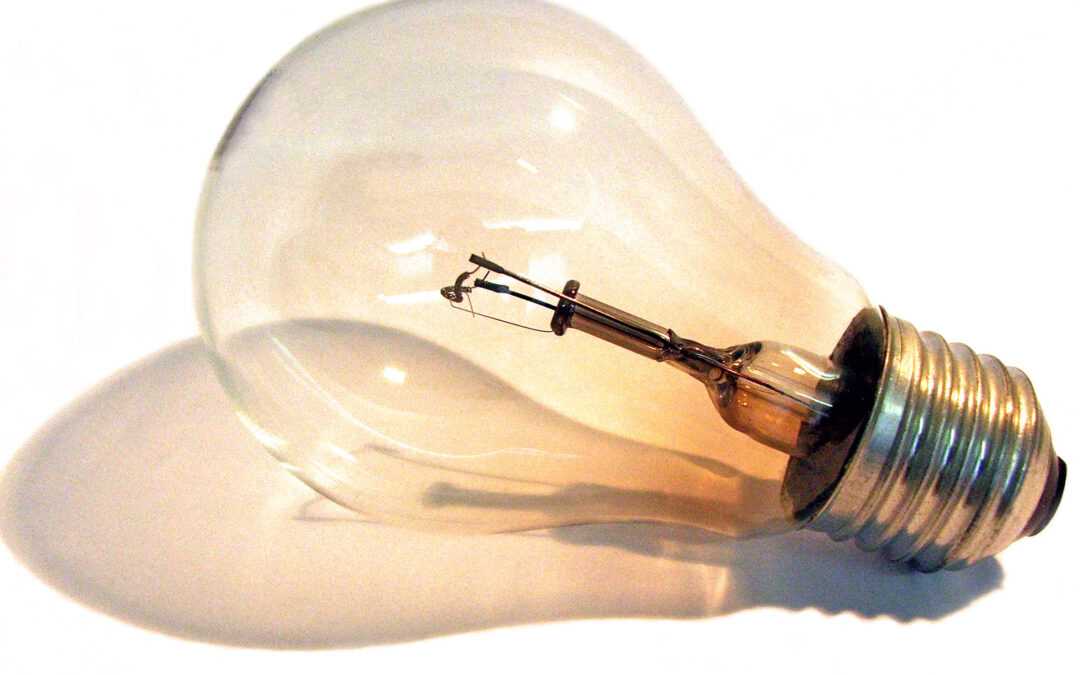
by Kathleen Lynch | May 5, 2026 | Design Patent, Entrepreneur, Entrepreneurship, Innovation, Intellectual Property, Inventor, IP, Patent, Plant Patent, Protection, Small Business, Start Up, Start Up Considerations, US Patent Office, Utility
Recently a new client came to me regarding whether his invention was patentable. I thought about this post and thought I’d repost it.
This is the first in a series of informational posts designed to demystify the core pillars of intellectual property law. Today, we focus on the patent: what it actually is and the specific protections it offers once granted by the government.
In the United States, there are three primary types of patents: Utility, Design, and Plant. Each serves a different purpose and offers a different window of protection.
1. Design Patents
Design patents protect the new, original, and ornamental aspects of a functional item. They don’t cover how a product works, but rather how it looks.
- Examples: The iconic shape of an iPhone® or the sleek curves of a Corvette® sports car.
- Term: Under current law, design patents have a life of 15 years from the date the patent is granted (for applications filed on or after May 13, 2015).
2. Plant Patents
A plant patent is a specialized grant for anyone who has invented or discovered—and asexually reproduced—a distinct and new variety of plant.
- Requirement: The variety must be “asexually reproduced,” meaning it is grown from something other than a seed (like a cutting or grafting).
- Term: Protection extends 20 years from the date of filing.
3. Utility Patents
Utility patents are the most common type and protect the “utility” or function of an invention. These cover:
- Articles of manufacture (physical products)
- Methods of manufacture (industrial processes)
- Compositions of matter (chemical formulas or pharmaceuticals)
- Business methods (often seen in the software and fintech sectors)
A Note on Software & Business Methods: This last category—business methods—remains a highly active area of legal debate in 2026. While they are still patentable, recent court decisions like Constellation Designs v. LG have reinforced that these patents must describe a specific technological solution rather than just a general “abstract idea.”
Requirements and Maintenance
To qualify for a utility patent, an invention must meet three strict criteria: it must be useful, novel (new), and non-obvious to someone skilled in that specific field.
A utility patent generally lasts for 20 years from the date of filing. However, the protection isn’t “set it and forget it.” To keep a utility patent active, you must pay maintenance fees to the US Patent and Trademark Office (USPTO) at three critical intervals:+1
- 3.5 years after issuance
- 7.5 years after issuance
- 11.5 years after issuance
Failure to pay these fees (which have seen significant updates as of 2025/2026) will result in the patent expiring early and your invention falling into the public domain.
Stay Ahead of the Game
Protecting your innovative developments is a critical component of any successful organization. Deciding when to file—and which type of patent best fits your business goals—is a decision that shouldn’t be made alone.
The Law Office of Kathleen Lynch PLLC is here to help you navigate these complexities and ensure your IP strategy keeps you ahead of the competition.
Ready to protect your ideas? Your first consultation is free. Email us: kl****@*****aw.com

by Kathleen Lynch | Apr 28, 2026 | Confidentiality, Entrepreneur, Entrepreneurship, Intellectual Property, IP, IP Management, Trade Secrets
Recently, the U.S. Court of Appeals for the Federal Circuit issued a significant reversal of a California district court’s finding of trade secret misappropriation. In the case of International Medical Devices, Inc. (IMD) v. Cornell (April 2026), the court ruled that no reasonable jury could have found several alleged trade secrets to be, in fact, “secrets.”
The Dispute: Cosmetic Penile Implants
The litigation centered on the Penuma® cosmetic penile implant. The plaintiffs alleged that four specific elements of their technology were stolen trade secrets:
- Structural Pockets: Internal voids within the implant to enhance softness and elasticity.
- Mesh Tabs: Components around the distal tip to facilitate tissue ingrowth.
- Absorbable Sutures: Used in combination with mesh tabs to hold the implant during initial healing.
- The “Supply List”: A specific list of materials and instruments used to perform the surgical implantation.
The “Death” of a Trade Secret: Public Disclosure
The Federal Circuit held that the first three alleged secrets (the structural design elements) were ineligible for protection because they had already been disclosed in prior patents.
Citing the precedent in Atl. Rsch. Mktg. Sys., Inc. v. Troy, 659 F.3d 1345, the court reaffirmed a fundamental rule of intellectual property:
“A trade secret is secret, a patent is not. That which is disclosed in a patent cannot be a trade secret.”
Because these design concepts appeared in public patent filings—some dating back decades—they were part of the public domain. You cannot claim “secrecy” over information that the government has already published for the world to see.
The Failure of Internal Protection
The fourth alleged trade secret—the list of surgical instruments—failed for a different reason: lack of reasonable efforts to maintain secrecy.
The plaintiffs had emailed this list to the defendant without any:
- Confidentiality caveats
- “Trade Secret” labels
- Explicit instructions on restricted handling
Under the California Uniform Trade Secrets Act (CUTSA), information only qualifies as a trade secret if the owner takes active, reasonable steps to keep it secret. Because the plaintiffs treated the list as ordinary correspondence in the past, they could not retroactively claim it was a protected secret during litigation.
The Takeaway: How to Protect Your Innovation
This case serves as a vital reminder for tech and medical device companies: If you have a trade secret, keep it that way.
- Audit Your Patents: Ensure you aren’t trying to protect information as a “secret” if it’s already described in your (or someone else’s) patent filings.
- Use NDAs Every Time: Never disclose sensitive information to an outside individual or organization without a signed Non-Disclosure Agreement (NDA).
- Label Everything: Mark confidential documents clearly as “Trade Secret”, “Proprietary” or “Confidential.”
- Need-to-Know Access: Limit employee access to sensitive data and provide regular training on internal security protocols.
Protect Your Innovation
Protecting your intellectual property is critical to the survival of any organization. In an evolving legal landscape, having the right counsel to navigate these decisions is more important than ever.
The Law Office of Kathleen Lynch PLLC is designed to help your business stay ahead of the game.
Your first consultation is free. Email us: kl****@*****aw.com