by Kathleen Lynch | May 5, 2026 | Design Patent, Entrepreneur, Entrepreneurship, Innovation, Intellectual Property, Inventor, IP, Patent, Plant Patent, Protection, Small Business, Start Up, Start Up Considerations, US Patent Office, Utility
Recently a new client came to me regarding whether his invention was patentable. I thought about this post and thought I’d repost it.
This is the first in a series of informational posts designed to demystify the core pillars of intellectual property law. Today, we focus on the patent: what it actually is and the specific protections it offers once granted by the government.
In the United States, there are three primary types of patents: Utility, Design, and Plant. Each serves a different purpose and offers a different window of protection.
1. Design Patents
Design patents protect the new, original, and ornamental aspects of a functional item. They don’t cover how a product works, but rather how it looks.
- Examples: The iconic shape of an iPhone® or the sleek curves of a Corvette® sports car.
- Term: Under current law, design patents have a life of 15 years from the date the patent is granted (for applications filed on or after May 13, 2015).
2. Plant Patents
A plant patent is a specialized grant for anyone who has invented or discovered—and asexually reproduced—a distinct and new variety of plant.
- Requirement: The variety must be “asexually reproduced,” meaning it is grown from something other than a seed (like a cutting or grafting).
- Term: Protection extends 20 years from the date of filing.
3. Utility Patents
Utility patents are the most common type and protect the “utility” or function of an invention. These cover:
- Articles of manufacture (physical products)
- Methods of manufacture (industrial processes)
- Compositions of matter (chemical formulas or pharmaceuticals)
- Business methods (often seen in the software and fintech sectors)
A Note on Software & Business Methods: This last category—business methods—remains a highly active area of legal debate in 2026. While they are still patentable, recent court decisions like Constellation Designs v. LG have reinforced that these patents must describe a specific technological solution rather than just a general “abstract idea.”
Requirements and Maintenance
To qualify for a utility patent, an invention must meet three strict criteria: it must be useful, novel (new), and non-obvious to someone skilled in that specific field.
A utility patent generally lasts for 20 years from the date of filing. However, the protection isn’t “set it and forget it.” To keep a utility patent active, you must pay maintenance fees to the US Patent and Trademark Office (USPTO) at three critical intervals:+1
- 3.5 years after issuance
- 7.5 years after issuance
- 11.5 years after issuance
Failure to pay these fees (which have seen significant updates as of 2025/2026) will result in the patent expiring early and your invention falling into the public domain.
Stay Ahead of the Game
Protecting your innovative developments is a critical component of any successful organization. Deciding when to file—and which type of patent best fits your business goals—is a decision that shouldn’t be made alone.
The Law Office of Kathleen Lynch PLLC is here to help you navigate these complexities and ensure your IP strategy keeps you ahead of the competition.
Ready to protect your ideas? Your first consultation is free. Email us: kl****@*****aw.com

by Kathleen Lynch | Mar 31, 2026 | Entrepreneur, Entrepreneurship, Innovation, Invention, Inventor, Patent, Patent Prosecution, Patentability, Small Business, Start Up, Start Up Considerations, Uncategorized, US Patent Office
A patentability search and assessment is always recommended when evaluating whether your invention would be entitled to meaningful patent protection. The search also helps to inform the inventor and patent attorney where there may be areas of more narrow protection and draft accordingly.
The United States Patent Office recently launched the AI Search Automated Pilot Program. The program is designed to evaluate the examination process by including an automated pre-examination search, and whether the inclusion will improve quality and efficiency of examinations.
The program (ASAP!) will conduct an automated search for original, noncontinuing, nonprovisional applications. The automated search results will be sent to the applicant and will provide an earlier communication regarding potential prior art issues. Under the pilot program, applicants will not be required to respond to the search results.
However, the search results may provide an opportunity to the applicant to file a preliminary amendment in an effort to place the application in a stronger position for allowance. Alternatively, the applicant may wish to file an express abandonment and obtain a fee refund in view of search results that indicate a lack of patentability.
Recently, the U.S. Patent Office has announced that it is waiving the fee requirement for any petition to participate under 37 C.F.R. 1.182 filed after March 23, 2026. This should enable self filing entrepreneurs and inventors to take advantage of this new program for free!
Capitalizing on innovative developments is critical to any organization. Having the right person to help you make those decisions is important. The Law Office of Kathleen Lynch PLLC is designed to help businesses such as yours keep ahead of the game. The first consultation is free. Email us at kl****@*****aw.com.
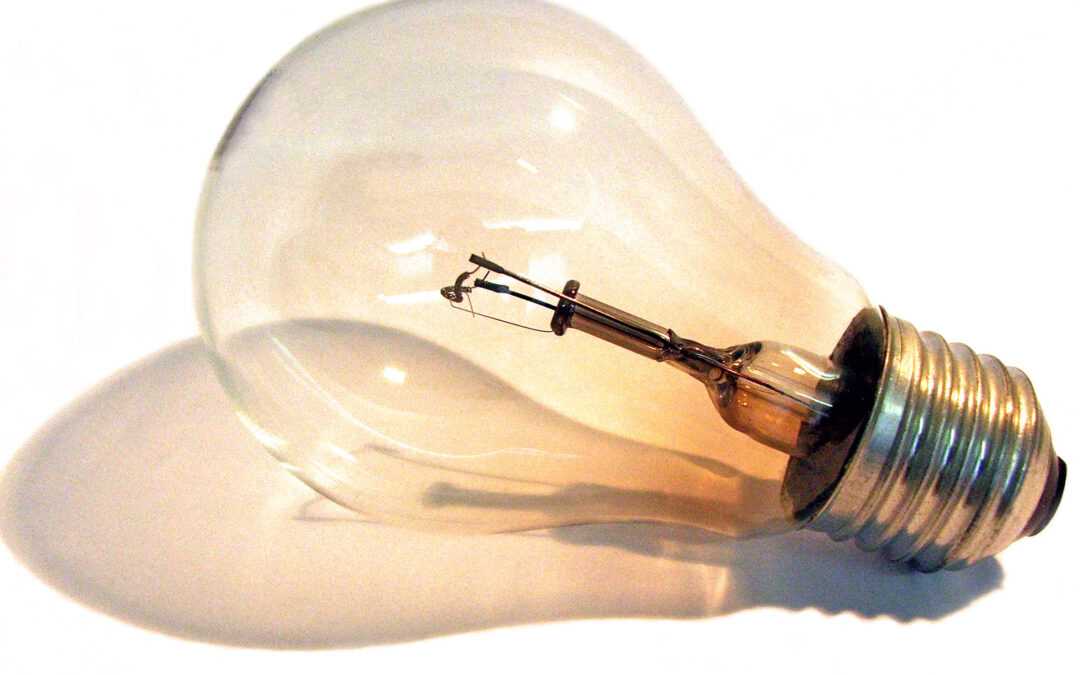
Photo by Szorstki on FreeImages

by Kathleen Lynch | Jan 29, 2015 | Entrepreneurship, Patent Prosecution, Start Up Considerations, Trademark Service Mark
Intellectual property is the life blood of many small businesses and entrepreneurial enterprises. Knowing how and what may need protection could mean the difference between success and failure. I set forth below three basic things every entrepreneur and business person should do to protect the intellectual property inherent in any organization.
- Identify your intellectual property
- Before you can protect your intellectual property assets, you need to understand what they are. Intellectual property is a bundle of legal rights. These consist essentially of patents, trademarks, copyrights and trade secrets. Patents are directed primarily to objects of manufacture (things), methods of making or doing something, designs (ornamental aspects of a thing), compositions of matter and plants. If you make devices or compositions of matter, you will likely want to determine whether your device, composition, or methodologies associated with your business may be subject to patent protection. If you make an object, you may also want to consider whether there are any ornamental aspects of your object that may be new and subject to design patent protection.
- If you use trademarks, service marks or logos in connection with the sale of your goods or services, you may want to register those marks or logos nationally or internationally. If your business involves training or educational services, any materials used may be subject to copyright protection. If your business has been successful by using particular strategies or processes that have given it a competitive edge over your competition, you may want to properly identify those strategies as trade secrets. Some methodologies used in manufacturing may be better suited to trade secret protection rather than patent protection.
- Determine whether your intellectual property can be protected
- Once you have identified what you believe to be your intellectual property, you need to determine whether it is protectable under current laws. If you believe your new widget is patentable, a patentability search and assessment is a logical next step. A patentability search and assessment will provide you with the information you need to determine whether there is any meaningful patent protection available to you. This applies to objects, as well as methods, compositions of matter, and designs. A proper patentability search will search all relevant patent records and provide you with the most pertinent documentation of the state of the relevant art. A patent professional can assist with interpreting the search results to determine the scope of patent protection likely available to your invention.
- Similarly, with a trademark or logo, an availability search and assessment is a prudent next step. This involves searching relevant records to provide you with current uses of the same or similar marks or logos. From this information, you can determine whether to proceed with a trademark or service mark registration. A trademark professional can help you make that determination.
- Protect What Intellectual Property You Can
- Once you have identified and determined what rights are available to you, you can proceed with protecting your intellectual property to maximize your competitive advantage. Patentable aspects of any objects, methods, compositions or designs should be protected. Marks or logos available for use and registration should be the subject of US or international trademark or service mark applications.
- Copyrighted materials should be marked with the “©” or “Copyright” followed by the year(s) in which the material was created and name of the owner. Trade secrets, properly identified, should be protected through a series of procedures identified by your organization to ensure confidentiality. This may include, by example, limiting access to certain information, marking documents as “confidential”, ensuring all employees understand their obligations to maintain secrecy of proprietary information, executing confidentiality agreements with third parties where proprietary information may be exchanged.
Protecting your innovative developments is critical to any organization. Having the right person to help you make that decision is important. The Law Office of Kathleen Lynch PLLC is designed to help businesses such as yours keep ahead of the game. The first telephone consultation is free. Email us at kl****@*****aw.com.

by Kathleen Lynch | Jan 14, 2015 | Entrepreneurship, Patent Prosecution, Start Up Considerations
Recently, one of my clients asked me about the pros and cons of marking “patent pending” on his invention. I advised him that I thought he should mark his invention and here’s why.
First, it puts others on notice that you intend to protect your invention with a patent. That means that if the patent covering your product issues, then others will need to assess whether they infringe your patent, if they use, make, sell, or offer for sale the product as described in the issued patent.
Second, while marking “patent pending” has no legal effect, when and if the patent issues, display of the patent number does impact your legal rights. Failure to mark your invention, once a patent issues, will prevent you from collecting damages until you either begin marking or you give actual notice of patent infringement.
Third, if you are putting others on notice that your product may be patentable, that may be advantageous when talking to investors or potential licensees. If your product becomes protected via a patent, then you have exclusive rights to exploit your patent for a period of 20 years from the date of filing. This may be a significant business advantage depending on the area of technology and existing business environment.
Finally, patent marking can be done either physically on the product itself or virtually. Virtual marking requires a website where information on patented products for your organization can be found. This saves in retooling time and expense. In addition, changes to the website can be done quickly and easily to maintain a complete and accurate record of all patents covered by your company.
Protecting your innovative developments is critical to any organization. Having the right person to help you make that decision is important. The Law Office of Kathleen Lynch PLLC is designed to help businesses such as yours keep ahead of the game. The first telephone consultation is free. Email us at kl****@*****aw.com.

by Kathleen Lynch | Jul 15, 2014 | Entrepreneur, Inventor, Small Business, Trademark
The United States Patent and Trademark Office is hosting its 16th Annual Independent Inventor Conference on August 15-16, 2014 at its offices in Arlington Virginia. The conference will enable independent inventors and small business owners to learn about the patent system, as well as network with other entrepreneurs and inventors.
Senior level officials from the USPTO and others will present information on patents, trademarks, and other intellectual property (IP) matters. In addition, experienced business owners and inventors will relate their personal perspectives in bringing their dreams to market. Governmental and business development entities will discuss commercial best practices and the various resources offered by their organizations. Each attendee will have an exclusive opportunity to meet one-on-one with a USPTO expert or IP professional of his or her choice, as well as hear keynote addresses from major figures in the entrepreneurial world.
Attendees will also be able to choose from a variety of panels and breakout sessions that address specific intellectual property topics relevant to the modern inventor and small business owner. These sessions include hands-on workshops on patent and trademark application filing, prior art searching, and recent changes in legislation that affect business owners and inventors, among many other topics.
So if you are in the DC area, this looks like a great event for any entrepreneur or small business owner.