
by Kathleen Lynch | Jun 3, 2026 | Entrepreneur, Entrepreneurship, Infringement, Innovation, Intellectual Property, Invention, IP, IP Management, Licensing, Litigation, Patent, Protection, Small Business, Start Up, Start Up Considerations, Uncategorized
Can you license your technology to another company and accidentally lose your right to sue copycats? According to a recent decision by the Federal Circuit Court of Appeals (CAFC), the answer depends entirely on how carefully you draft your contract.
In ALM Holding Company & Ergon Asphalt & Emulsions, Inc. v. Zydex Industries, the CAFC reversed a district court’s dismissal of a patent infringement suit, delivering a crucial reminder to businesses about the fine print of intellectual property licensing.
The Case: A Question of Standing
The plaintiffs brought a patent infringement lawsuit against Zydex, but the district court threw the case out before it could even begin. Why? The court determined that the plaintiffs lacked constitutional standing to sue.
The district court reasoned that because the plaintiffs had granted an exclusive license for the subject patents to a third party, they no longer suffered a direct “injury-in-fact” from infringement. Even though the plaintiffs had retained certain rights, the lower court believed they had signed away too much control to seek legal redress.
However, the plaintiffs had been careful to retain three specific powers in their licensing agreement:
- The right to sue for infringement.
- The right to approve all sublicenses.
- The right to approve any assignment of rights by the licensee.
The CAFC Decision: Keeping a “Non-Illusory” Interest
The CAFC reversed the dismissal and sent the case back to the district court.
The appellate court found that because the plaintiffs had retained the right to sue and control sublicenses, they kept a sufficient exclusionary interest in the patents. In short: they retained enough skin in the game to maintain standing for an infringement action.
The Takeaway for Businesses
A patent owner’s core power is the right to exclude others from making, using, selling, or offering to sell their invention. When entering into exclusive license agreements, licensors must be incredibly strategic. If you do not carefully retain specific enforcement and approval rights, you risk accidentally stripping your business of the legal standing required to defend your own technology.
Guard Your Innovations with Expert Counsel
Capitalizing on innovative developments is critical to your organization’s growth—but protecting those assets requires foresight.
The Law Office of Kathleen Lynch PLLC is designed to help businesses like yours stay ahead of the game and navigate complex IP landscapes. Don’t leave your licensing agreements to chance.
- Ready to protect your IP? Your first consultation is entirely free.
- Get in touch: Email us today at kl****@*****aw.com to schedule your strategy session.

by Kathleen Lynch | May 27, 2026 | Design Patent, Entrepreneur, Entrepreneurship, Infringement, Innovation, Intellectual Property, Invention, Inventor, IP, IP asset management, Litigation, Patent, Patent Prosecution, Patentability, Plant Patent, Small Business, Start Up, Start Up Considerations, Uncategorized, Utility
This is the second in our series of posts breaking down the fundamentals of patents. In [Part 1], we discussed the scope of a patent and the process of obtaining one. Today, we’re focusing on the payoff: the benefits of a patent and how you can enforce your rights.
Now that you have a patent, what can it actually do for you?
Ultimately, a patent is only as valuable as your ability to enforce it. As a patent owner, you hold the exclusive right to prevent others from making, using, selling, or offering to sell your invention. But how do we determine if someone is actually stepping on your toes? It all comes down to the claims.
Defining the “Metes and Bounds”
A patented invention is strictly defined by its claims. Located at the very end of the patent document, these numbered paragraphs map out the legal “metes and bounds” of your intellectual property. Think of them as the invisible fence around your innovation.
When a dispute arises or a patent is asserted against an alleged infringer, the process follows two main steps:
- Interpretation: The court interprets the claims to determine the exact scope of the invention.
- Application: That scope is compared directly to the competitor’s product or activity to see if it falls within your protected territory.
The Power of Enforcement
Patent infringement is a serious matter handled exclusively via federal civil actions. If a competitor crosses the line, the law provides robust remedies to make things right.
As a patent owner, you can pursue:
- Monetary Damages: Recovery of actual damages (like lost profits or reasonable royalties).
- Treble Damages: If the infringement is proven to be willful or intentional, the court can award up to three timesthe actual damages.
- Injunctions: Court orders to immediately halt existing and future infringing activity.
- Fees: In exceptional cases, the recovery of court costs and attorneys’ fees.
Protect Your Innovation
Capitalizing on your innovative developments is critical to your organization’s growth, but you shouldn’t navigate the complex world of intellectual property alone. Having the right legal partner to guide your decisions is vital.
The Law Office of Kathleen Lynch PLLC is designed to help businesses like yours stay ahead of the game and safeguard what they build.
Ready to protect your competitive edge? Your first consultation is completely free.

by Kathleen Lynch | May 18, 2026 | Entrepreneur, Infringement, Innovation, Intellectual Property, Invention, Inventor, IP, Litigation, Patent, Patent Prosecution, Protection, Small Business, Start Up, Start Up Considerations, Uncategorized
This week, Actelion Pharmaceuticals (“Actelion”) failed in its effort to hold Mylan Pharmaceuticals (“Mylan”) liable for infringing its patents on a highly successful hypertension drug, Veletri®. The Federal Circuit’s decision serves as a stark reminder to businesses everywhere: in the world of intellectual property, omitting a single technical detail can cost you a monopoly.
The Dispute: A Battle Over a Generic Alternative
Actelion holds patent protection for Veletri, a life-saving drug used to treat pulmonary arterial hypertension. Seeking to enter the market with a lower-cost generic version, Mylan filed an Abbreviated New Drug Application (ANDA) with the FDA, asserting that its generic product did not infringe Actelion’s intellectual property. Actelion promptly sued Mylan in federal court, asserting infringement of two patents covering the formulation process.
The entire case ultimately hinged on a single chemical metric: pH measurement.
The Flaw: The Missing Temperature Parameter
Actelion’s patent claims focused heavily on a specific requirement: the drug must be formulated from a bulk solution having a “pH of 13 or higher.” The issue at trial was how that pH should be measured. In chemistry, a solution’s pH fluctuates based on environment—specifically, temperature. However, Actelion’s patent specification failed to provide any explicit instructions on the temperature conditions required for taking the measurement.
Because the patent was silent, the court turned to standard industry practices. Generally, unless a scientist indicates otherwise, pH is measured at standard room temperature. When Mylan’s product is measured at room temperature, its pH is well below 13, meaning it does not literally infringe the patent.
Actelion attempted to argue that because Mylan refrigerates the solution during actual manufacturing, the pH should be measured at that colder operating temperature—where the chemical properties shift and the pH does indeed rise above 13. The district court rejected this argument, holding that because Actelion failed to specify any special conditions in its paperwork, standard room temperature must apply.
The Federal Circuit Weighs In
The Federal Circuit Court of Appeals upheld the district court’s finding of non-infringement. In its opinion, the court stated:
“The district court here properly relied on just that sort of extrinsic evidence to find that those skilled in making pharmaceutical compositions, when referring to pH, mean a measurement at standard temperature unless they indicate otherwise, and we discern no clear error in how the district court evaluated the record.”
The Takeaway
Details are everything. Had Actelion explicitly stated in its patent specification that the pH threshold was meant to be measured at the cold manufacturing temperature, Mylan’s product would have clearly infringed. Instead, because Actelion left out that vital context, Mylan was able to successfully design around the patent and keep its generic product on the path to market.
Capitalizing on innovative developments is critical to your organization’s growth, but protecting those developments requires meticulous execution. Having the right legal partner to help you navigate and stress-test your intellectual property strategy is essential to staying ahead of the game.
The Law Office of Kathleen Lynch PLLC is designed to help businesses secure their innovations and avoid costly drafting traps. Your first consultation is free. Contact us today at kl****@*****aw.com to protect what you build.

by Kathleen Lynch | May 12, 2026 | Copying, Copyright, Entrepreneur, Entrepreneurship, Infringement, Innovation, Intellectual Property, IP, Licensing, Small Business, Start Up
The legal battle over Generative AI reached a fever pitch this past week as five of the world’s largest publishing houses—Elsevier, Cengage, Hachette, Macmillan, and McGraw Hill—joined forces with celebrated author Scott Turow to file a massive copyright infringement action in New York.
The case, Elsevier Inc. et al. v. Meta Platforms, Inc. and Mark Zuckerberg (S.D.N.Y. 2026), marks a significant escalation in the industry’s defense of intellectual property. The plaintiffs allege that Meta, under the personal direction of Mark Zuckerberg, infringed upon millions of copyrighted works to build its “Llama” AI models.
A Three-Phase Infringement Strategy
The complaint meticulously outlines a “three-phase” process of alleged infringement:
- Torrenting from “Shadow Libraries”: The plaintiffs allege Meta willfully downloaded millions of books and journals from notorious pirate sites, including LibGen, Sci-Hub, and Anna’s Archive.
- Unauthorized Training and Reproduction: The suit claims Meta made millions of unauthorized digital copies during the preprocessing and training phases of its Llama Large Language Models (LLMs).
- The “Infinite Substitution Machine”: Perhaps most critically, the plaintiffs argue the end product is designed to directly compete with their original works, creating an “infinite substitution machine” that generates content intended to replace the need for the original copyrighted materials.
Beyond Copyright: The DMCA and Personal Liability
The lawsuit further alleges violations of the Digital Millennium Copyright Act (DMCA). Specifically, the plaintiffs claim Meta systematically stripped away Copyright Management Information (CMI)—such as ISBNs, DOIs, and digital watermarks—to obfuscate the illicit sources of its training data.
Most notably, the case names Mark Zuckerberg personally as a defendant. The complaint characterizes Zuckerberg as the “guiding force” behind a “move fast and break things” strategy that prioritized data acquisition at any cost. This bold move raises significant questions regarding corporate veil-piercing and the extent to which a high-level executive can be held personally liable for a corporation’s infringing activities.
Protecting Your Intellectual Capital
Capitalizing on innovation while navigating the complexities of intellectual property law is critical to the survival of any modern organization. Having a strategic partner to guide these decisions is no longer optional—it is a necessity.
The Law Office of Kathleen Lynch PLLC is dedicated to helping businesses like yours stay ahead of the curve and protect what they build.
Start the conversation today. Your first consultation is free. Email us: kl****@*****aw.com

by Kathleen Lynch | Apr 14, 2026 | Copying, Copyright, Infringement, Intellectual Property, Internet, Litigation, Small Business
In a major blow to copyright holders, a recent high stakes battle between Cox Communications and Sony Music Entertainment has redefined the boundaries of internet service provider (ISP) liability.
The Background: 163,000 Red Flags
As an ISP, Cox provides the “pipes” for the internet. Sony, representing various music copyright owners, employed the firm MarkMonitor to track illegal downloads. Over a two-year period, Sony sent Cox approximately 163,000 notices identifying specific IP addresses associated with copyright infringement.
Despite these thousands of notices, the infringing activity continued. Sony sued Cox in federal district court on two counts:
- Contributory Infringement: Claiming Cox contributed to the users’ illegal activity.
- Vicarious Liability: Claiming Cox was responsible for the infringement occurring on its network.
The initial jury found Cox liable on both counts. However, upon appeal, the Fourth Circuit Court of Appeals delivered a split decision: it affirmed the contributory infringement but reversed the vicarious liability.
The Ruling: Intent is Everything
The Supreme Court ultimately held that Cox was not liable for contributory infringement. The reasoning? Cox did not intend for its service to be used for illegal downloading.
The court found that:
- Cox did not actively induce users to infringe.
- The service was not “tailored” specifically for copyright
- Providing a general-purpose tool (internet access) that can be used for infringement is not the same as intending for it to happen.
The Takeaway: Knowledge vs. Intent
The court’s decision essentially looked past the fact that Cox received 163,000 notices and did nothing. The takeaway for IP owners is clear: To prevail on contributory infringement, you must prove intent. Simply knowing that a service can be used for infringing activity—or even being told it is being used that way—may no longer be enough to hold a service provider liable if the service has substantial non-infringing uses. In this case, the court decided that “knowing” wasn’t “doing.”
Protect Your Innovation
Protecting your intellectual property is critical to the survival of any organization. In a changing legal landscape, having the right counsel to help you navigate these decisions is more important than ever.
The Law Office of Kathleen Lynch PLLC is designed to help your business stay ahead of the game.
Your first consultation is free. Email us: kl****@*****aw.com
by Kathleen Lynch | Apr 7, 2026 | Entrepreneurship, Infringement, Innovation, Intellectual Property, Invention, Inventor, Patent, Start Up, Start Up Considerations, US Patent Office
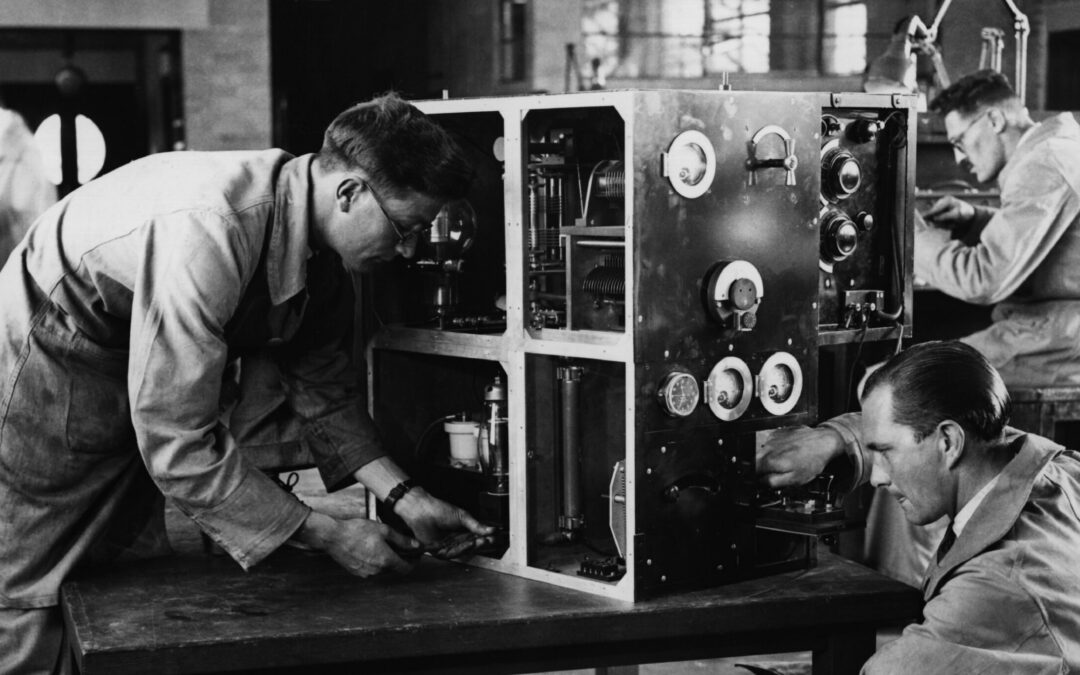
In patent law, making sure that all the correct inventors are named in a patent application is critical to the validity of the patent. If an inventor is incorrectly included, or if an inventor is omitted from the list of named inventors, it can result in a patent being found invalid and thus unenforceable.
This happened recently to Fortress Iron, LP (“Fortress”). This week, the U.S. Court of Appeals for the Federal Circuit ruled against Fortress in Fortress Iron, LP v. Digger Specialties, Inc.,. The case involved a couple of issued patents directed to a vertical railing panel that could be purchased as a pre-assembled panel. The idea was initially developed in 2013 by two Fortress employees in the U.S. However, the initial design had issues relating to rotation of the panel during tensioning of the cables. Fortress works with two Chinese companies, a manufacturing company and a quality control company to produce its products. An employee from the manufacturing company and an employee for the quality control company worked with Fortress to revise the railing panel design to alleviate the rotation during tensioning.
After a final design was completed, Fortress applied and obtained two patents for its vertical railing panel. Both Fortress employees were named as inventors but neither the manufacturing company employee nor the quality control company employee were named as inventors. In 2016, the quality control employee involved in the design of the railing panel left his employment and did not provide a forwarding address.
In 2021, Fortress sued Digger Specialties Inc. (“Digger”) for patent infringement of the two patents directed to the vertical railing panel. During the lawsuit, it was discovered that the two Chinese employees were omitted from the patents when they should have been included. Moreover, Fortress could not amend the patent to include the quality control employee because he left no forwarding address after his employment and could not be found.
The appeals court ruled that because Fortress was not able to name him as an inventor, the patents were invalid. Fortress was unable to assert its infringement claim against Digger because the patents were no longer valid and thus unenforceable.
What’s the takeaway here? Patent inventorship is an important consideration when filing for a patent. Inventorship is defined as a person who has contributed to the conception of the invention. Conception has been described as someone who has a definite idea of the complete invention. Because the claims of a patent define the invention, an inventor is anyone who has contributed to the conception of at least one claim in the patent. Failure to include an inventor or including a non-inventor can jeopardize the validity of your issued patent.
Protecting your innovative developments is critical to any organization. Having the right person to help you make that decision is important. The Law Office of Kathleen Lynch PLLC is designed to help businesses such as yours keep ahead of the game. The first consultation is free. Email us at kl****@*****aw.com.