
by Kathleen Lynch | May 12, 2026 | Copying, Copyright, Entrepreneur, Entrepreneurship, Infringement, Innovation, Intellectual Property, IP, Licensing, Small Business, Start Up
The legal battle over Generative AI reached a fever pitch this past week as five of the world’s largest publishing houses—Elsevier, Cengage, Hachette, Macmillan, and McGraw Hill—joined forces with celebrated author Scott Turow to file a massive copyright infringement action in New York.
The case, Elsevier Inc. et al. v. Meta Platforms, Inc. and Mark Zuckerberg (S.D.N.Y. 2026), marks a significant escalation in the industry’s defense of intellectual property. The plaintiffs allege that Meta, under the personal direction of Mark Zuckerberg, infringed upon millions of copyrighted works to build its “Llama” AI models.
A Three-Phase Infringement Strategy
The complaint meticulously outlines a “three-phase” process of alleged infringement:
- Torrenting from “Shadow Libraries”: The plaintiffs allege Meta willfully downloaded millions of books and journals from notorious pirate sites, including LibGen, Sci-Hub, and Anna’s Archive.
- Unauthorized Training and Reproduction: The suit claims Meta made millions of unauthorized digital copies during the preprocessing and training phases of its Llama Large Language Models (LLMs).
- The “Infinite Substitution Machine”: Perhaps most critically, the plaintiffs argue the end product is designed to directly compete with their original works, creating an “infinite substitution machine” that generates content intended to replace the need for the original copyrighted materials.
Beyond Copyright: The DMCA and Personal Liability
The lawsuit further alleges violations of the Digital Millennium Copyright Act (DMCA). Specifically, the plaintiffs claim Meta systematically stripped away Copyright Management Information (CMI)—such as ISBNs, DOIs, and digital watermarks—to obfuscate the illicit sources of its training data.
Most notably, the case names Mark Zuckerberg personally as a defendant. The complaint characterizes Zuckerberg as the “guiding force” behind a “move fast and break things” strategy that prioritized data acquisition at any cost. This bold move raises significant questions regarding corporate veil-piercing and the extent to which a high-level executive can be held personally liable for a corporation’s infringing activities.
Protecting Your Intellectual Capital
Capitalizing on innovation while navigating the complexities of intellectual property law is critical to the survival of any modern organization. Having a strategic partner to guide these decisions is no longer optional—it is a necessity.
The Law Office of Kathleen Lynch PLLC is dedicated to helping businesses like yours stay ahead of the curve and protect what they build.
Start the conversation today. Your first consultation is free. Email us: kl****@*****aw.com
by Kathleen Lynch | Apr 21, 2026 | Entrepreneur, Entrepreneurship, Innovation, Intellectual Property, International, Invention, Inventor, IP, Logo, Patent, Protection, Service Mark, Trade Dress, Trade Name, Trade Secrets, Trademark, Uncategorized
Sunday, April 26th is World Intellectual Property Day. Established in 2000 by the World Intellectual Property Organization. (WIPO), this day serves a vital purpose: to pull back the curtain on the world of intellectual property (IP) and show how it shapes our daily lives.
This Year’s Theme: The Spirit of Sport
This year, we are shining a spotlight on the intersection of innovation and athletics. From cutting-edge equipment and game-changing technologies to the iconic brands that define our favorite teams, IP is the engine driving the sports industry forward.
We celebrate:
- The Creators & Inventors: Whose devotion leads to safer, faster, and more effective sports gear.
- The Storytellers: Whose copyrighted broadcasts preserve historic moments for generations.
- The Brands: The trademarks, logos, and colors that unite fans across the globe.
More Than Just a Game
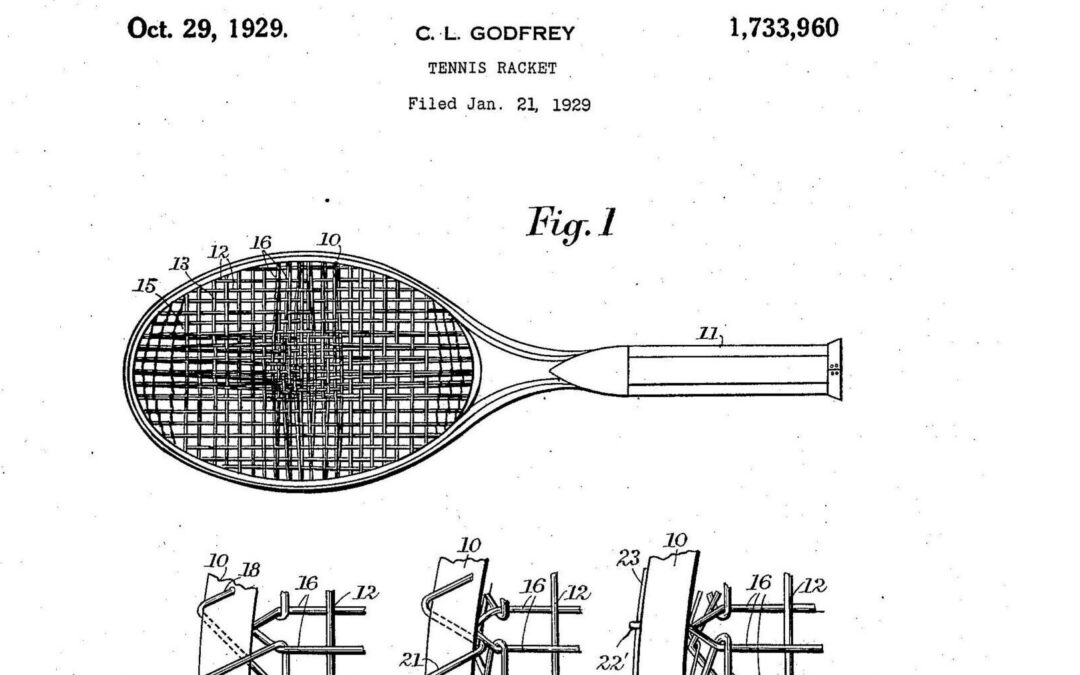
The next time you lace up your running shoes or pick up a tennis racquet, take a moment to consider the genius behind them. Whether it’s a patent for a new material, a design for aerodynamics, or a trade secret that gives a brand its edge, IP doesn’t just protect ideas—it enhances the way we play and live.
Is Your Innovation Protected?
Protecting your developments is critical to staying competitive. In a fast-moving market, having the right legal partner to navigate these decisions is the ultimate “home-field advantage.”
The Law Office of Kathleen Lynch PLLC is dedicated to helping businesses like yours keep ahead of the game.
Ready to protect your vision? Your first consultation is free. 📧 Email us today: kl****@*****aw.com

by Kathleen Lynch | Apr 14, 2026 | Copying, Copyright, Infringement, Intellectual Property, Internet, Litigation, Small Business
In a major blow to copyright holders, a recent high stakes battle between Cox Communications and Sony Music Entertainment has redefined the boundaries of internet service provider (ISP) liability.
The Background: 163,000 Red Flags
As an ISP, Cox provides the “pipes” for the internet. Sony, representing various music copyright owners, employed the firm MarkMonitor to track illegal downloads. Over a two-year period, Sony sent Cox approximately 163,000 notices identifying specific IP addresses associated with copyright infringement.
Despite these thousands of notices, the infringing activity continued. Sony sued Cox in federal district court on two counts:
- Contributory Infringement: Claiming Cox contributed to the users’ illegal activity.
- Vicarious Liability: Claiming Cox was responsible for the infringement occurring on its network.
The initial jury found Cox liable on both counts. However, upon appeal, the Fourth Circuit Court of Appeals delivered a split decision: it affirmed the contributory infringement but reversed the vicarious liability.
The Ruling: Intent is Everything
The Supreme Court ultimately held that Cox was not liable for contributory infringement. The reasoning? Cox did not intend for its service to be used for illegal downloading.
The court found that:
- Cox did not actively induce users to infringe.
- The service was not “tailored” specifically for copyright
- Providing a general-purpose tool (internet access) that can be used for infringement is not the same as intending for it to happen.
The Takeaway: Knowledge vs. Intent
The court’s decision essentially looked past the fact that Cox received 163,000 notices and did nothing. The takeaway for IP owners is clear: To prevail on contributory infringement, you must prove intent. Simply knowing that a service can be used for infringing activity—or even being told it is being used that way—may no longer be enough to hold a service provider liable if the service has substantial non-infringing uses. In this case, the court decided that “knowing” wasn’t “doing.”
Protect Your Innovation
Protecting your intellectual property is critical to the survival of any organization. In a changing legal landscape, having the right counsel to help you navigate these decisions is more important than ever.
The Law Office of Kathleen Lynch PLLC is designed to help your business stay ahead of the game.
Your first consultation is free. Email us: kl****@*****aw.com

by Kathleen Lynch | Mar 22, 2016 | Entrepreneurship, Start Up Considerations
Paul McCartney is using a US Copyright provision to right a wrong he feels occurred many years ago. As you may recall, the bulk of the Beatles tunes were attributed to the duo of John Lennon and Paul McCartney. However, in the 1960’s, Paul McCartney and the other Beatles lost their publishing rights to many of their songs when ATV, a publishing company created by the Beatles, their manager and some of their investors, was sold without the knowledge of the band members.
At one time Yoko Ono, John Lennon’s widow and McCartney tried to purchase ATV for 20 million dollars. The deal fell through and Michael Jackson purchased ATV for 47.5 million in 1985. McCartney may now be able to reclaim those rights 56 years later.
Rather than let it be, McCartney filed a “notice of termination” with the US Copyright Office. This enables a songwriter to reclaim ownership in publishing rights for a song anywhere between 2 to 10 years before the 56 year lapse of time after the publication rights were originally sold. Some of the songs won’t be eligible for release until the singer is 83.
What’s the take away here. Any artist, author or creator of a work protected under copyright law should understand those rights . In addition, anyone who may have an interest subject to copyright law should think carefully about corporate structure and where the ownership of the intellectual property should be held when forming a new business. This often takes the form of an IP holding company. Situations may vary, but who will own the rights in the copyright and how the business will be structured should be well thought out when setting up any business.
Protecting your innovative developments is critical to any organization. Having the right person to help you make that decision is important. The Law Office of Kathleen Lynch PLLC is designed to help businesses such as yours keep ahead of the game. The first telephone consultation is free. Email us at kl****@*****aw.com.

by Kathleen Lynch | Oct 14, 2015 | IP Management
The Sixth Circuit Court of Appeals recently ruled that cheer leading uniforms may be subject to copyright protection. In particular, in Varsity Brands vs. Star Athletica, the court overruled a district court’s holding that the Varsity Brand uniforms were not separable from the utilitarian aspects of the uniform and thus not eligible for copyright protection.
The appellate court found that the design aspects of a cheer leading uniform can exist independently from the utilitarian ones. The court found that Varsity’s designers “arrange various graphic elements, including stripes, lines, chevrons, angles, curves, coloring, and shapes.” Id. at 28. The court concluded that the arrangement of design aspects to be totally separable from the garment’s functional aspects, namely “ to cover the body, permit free movement, and wick moisture.”
What is the take away here? Well for the fashion industry, this is good news. The appellate court is recognizing the separation of the functional aspects of a garment from the design elements. If that can be shown in this case, Varsity Brands may prevail on its copyright infringement claims against Star Athletica and companies moving forward may obtain copyright protection for their garments.
Protecting your innovative developments is critical to any organization. Having the right person to help you make that decision is important. The Law Office of Kathleen Lynch PLLC is designed to help businesses such as yours keep ahead of the game. The first telephone consultation is free. Email us at kl****@*****aw.com.