by Kathleen Lynch | May 27, 2026 | Design Patent, Entrepreneur, Entrepreneurship, Infringement, Innovation, Intellectual Property, Invention, Inventor, IP, IP asset management, Litigation, Patent, Patent Prosecution, Patentability, Plant Patent, Small Business, Start Up, Start Up Considerations, Uncategorized, Utility
This is the second in our series of posts breaking down the fundamentals of patents. In [Part 1], we discussed the scope of a patent and the process of obtaining one. Today, we’re focusing on the payoff: the benefits of a patent and how you can enforce your rights.
Now that you have a patent, what can it actually do for you?
Ultimately, a patent is only as valuable as your ability to enforce it. As a patent owner, you hold the exclusive right to prevent others from making, using, selling, or offering to sell your invention. But how do we determine if someone is actually stepping on your toes? It all comes down to the claims.
Defining the “Metes and Bounds”
A patented invention is strictly defined by its claims. Located at the very end of the patent document, these numbered paragraphs map out the legal “metes and bounds” of your intellectual property. Think of them as the invisible fence around your innovation.
When a dispute arises or a patent is asserted against an alleged infringer, the process follows two main steps:
- Interpretation: The court interprets the claims to determine the exact scope of the invention.
- Application: That scope is compared directly to the competitor’s product or activity to see if it falls within your protected territory.
The Power of Enforcement
Patent infringement is a serious matter handled exclusively via federal civil actions. If a competitor crosses the line, the law provides robust remedies to make things right.
As a patent owner, you can pursue:
- Monetary Damages: Recovery of actual damages (like lost profits or reasonable royalties).
- Treble Damages: If the infringement is proven to be willful or intentional, the court can award up to three timesthe actual damages.
- Injunctions: Court orders to immediately halt existing and future infringing activity.
- Fees: In exceptional cases, the recovery of court costs and attorneys’ fees.
Protect Your Innovation
Capitalizing on your innovative developments is critical to your organization’s growth, but you shouldn’t navigate the complex world of intellectual property alone. Having the right legal partner to guide your decisions is vital.
The Law Office of Kathleen Lynch PLLC is designed to help businesses like yours stay ahead of the game and safeguard what they build.
Ready to protect your competitive edge? Your first consultation is completely free.

by Kathleen Lynch | May 18, 2026 | Entrepreneur, Infringement, Innovation, Intellectual Property, Invention, Inventor, IP, Litigation, Patent, Patent Prosecution, Protection, Small Business, Start Up, Start Up Considerations, Uncategorized
This week, Actelion Pharmaceuticals (“Actelion”) failed in its effort to hold Mylan Pharmaceuticals (“Mylan”) liable for infringing its patents on a highly successful hypertension drug, Veletri®. The Federal Circuit’s decision serves as a stark reminder to businesses everywhere: in the world of intellectual property, omitting a single technical detail can cost you a monopoly.
The Dispute: A Battle Over a Generic Alternative
Actelion holds patent protection for Veletri, a life-saving drug used to treat pulmonary arterial hypertension. Seeking to enter the market with a lower-cost generic version, Mylan filed an Abbreviated New Drug Application (ANDA) with the FDA, asserting that its generic product did not infringe Actelion’s intellectual property. Actelion promptly sued Mylan in federal court, asserting infringement of two patents covering the formulation process.
The entire case ultimately hinged on a single chemical metric: pH measurement.
The Flaw: The Missing Temperature Parameter
Actelion’s patent claims focused heavily on a specific requirement: the drug must be formulated from a bulk solution having a “pH of 13 or higher.” The issue at trial was how that pH should be measured. In chemistry, a solution’s pH fluctuates based on environment—specifically, temperature. However, Actelion’s patent specification failed to provide any explicit instructions on the temperature conditions required for taking the measurement.
Because the patent was silent, the court turned to standard industry practices. Generally, unless a scientist indicates otherwise, pH is measured at standard room temperature. When Mylan’s product is measured at room temperature, its pH is well below 13, meaning it does not literally infringe the patent.
Actelion attempted to argue that because Mylan refrigerates the solution during actual manufacturing, the pH should be measured at that colder operating temperature—where the chemical properties shift and the pH does indeed rise above 13. The district court rejected this argument, holding that because Actelion failed to specify any special conditions in its paperwork, standard room temperature must apply.
The Federal Circuit Weighs In
The Federal Circuit Court of Appeals upheld the district court’s finding of non-infringement. In its opinion, the court stated:
“The district court here properly relied on just that sort of extrinsic evidence to find that those skilled in making pharmaceutical compositions, when referring to pH, mean a measurement at standard temperature unless they indicate otherwise, and we discern no clear error in how the district court evaluated the record.”
The Takeaway
Details are everything. Had Actelion explicitly stated in its patent specification that the pH threshold was meant to be measured at the cold manufacturing temperature, Mylan’s product would have clearly infringed. Instead, because Actelion left out that vital context, Mylan was able to successfully design around the patent and keep its generic product on the path to market.
Capitalizing on innovative developments is critical to your organization’s growth, but protecting those developments requires meticulous execution. Having the right legal partner to help you navigate and stress-test your intellectual property strategy is essential to staying ahead of the game.
The Law Office of Kathleen Lynch PLLC is designed to help businesses secure their innovations and avoid costly drafting traps. Your first consultation is free. Contact us today at kl****@*****aw.com to protect what you build.
by Kathleen Lynch | May 5, 2026 | Design Patent, Entrepreneur, Entrepreneurship, Innovation, Intellectual Property, Inventor, IP, Patent, Plant Patent, Protection, Small Business, Start Up, Start Up Considerations, US Patent Office, Utility
Recently a new client came to me regarding whether his invention was patentable. I thought about this post and thought I’d repost it.
This is the first in a series of informational posts designed to demystify the core pillars of intellectual property law. Today, we focus on the patent: what it actually is and the specific protections it offers once granted by the government.
In the United States, there are three primary types of patents: Utility, Design, and Plant. Each serves a different purpose and offers a different window of protection.
1. Design Patents
Design patents protect the new, original, and ornamental aspects of a functional item. They don’t cover how a product works, but rather how it looks.
- Examples: The iconic shape of an iPhone® or the sleek curves of a Corvette® sports car.
- Term: Under current law, design patents have a life of 15 years from the date the patent is granted (for applications filed on or after May 13, 2015).
2. Plant Patents
A plant patent is a specialized grant for anyone who has invented or discovered—and asexually reproduced—a distinct and new variety of plant.
- Requirement: The variety must be “asexually reproduced,” meaning it is grown from something other than a seed (like a cutting or grafting).
- Term: Protection extends 20 years from the date of filing.
3. Utility Patents
Utility patents are the most common type and protect the “utility” or function of an invention. These cover:
- Articles of manufacture (physical products)
- Methods of manufacture (industrial processes)
- Compositions of matter (chemical formulas or pharmaceuticals)
- Business methods (often seen in the software and fintech sectors)
A Note on Software & Business Methods: This last category—business methods—remains a highly active area of legal debate in 2026. While they are still patentable, recent court decisions like Constellation Designs v. LG have reinforced that these patents must describe a specific technological solution rather than just a general “abstract idea.”
Requirements and Maintenance
To qualify for a utility patent, an invention must meet three strict criteria: it must be useful, novel (new), and non-obvious to someone skilled in that specific field.
A utility patent generally lasts for 20 years from the date of filing. However, the protection isn’t “set it and forget it.” To keep a utility patent active, you must pay maintenance fees to the US Patent and Trademark Office (USPTO) at three critical intervals:+1
- 3.5 years after issuance
- 7.5 years after issuance
- 11.5 years after issuance
Failure to pay these fees (which have seen significant updates as of 2025/2026) will result in the patent expiring early and your invention falling into the public domain.
Stay Ahead of the Game
Protecting your innovative developments is a critical component of any successful organization. Deciding when to file—and which type of patent best fits your business goals—is a decision that shouldn’t be made alone.
The Law Office of Kathleen Lynch PLLC is here to help you navigate these complexities and ensure your IP strategy keeps you ahead of the competition.
Ready to protect your ideas? Your first consultation is free. Email us: kl****@*****aw.com
by Kathleen Lynch | Apr 21, 2026 | Entrepreneur, Entrepreneurship, Innovation, Intellectual Property, International, Invention, Inventor, IP, Logo, Patent, Protection, Service Mark, Trade Dress, Trade Name, Trade Secrets, Trademark, Uncategorized
Sunday, April 26th is World Intellectual Property Day. Established in 2000 by the World Intellectual Property Organization. (WIPO), this day serves a vital purpose: to pull back the curtain on the world of intellectual property (IP) and show how it shapes our daily lives.
This Year’s Theme: The Spirit of Sport
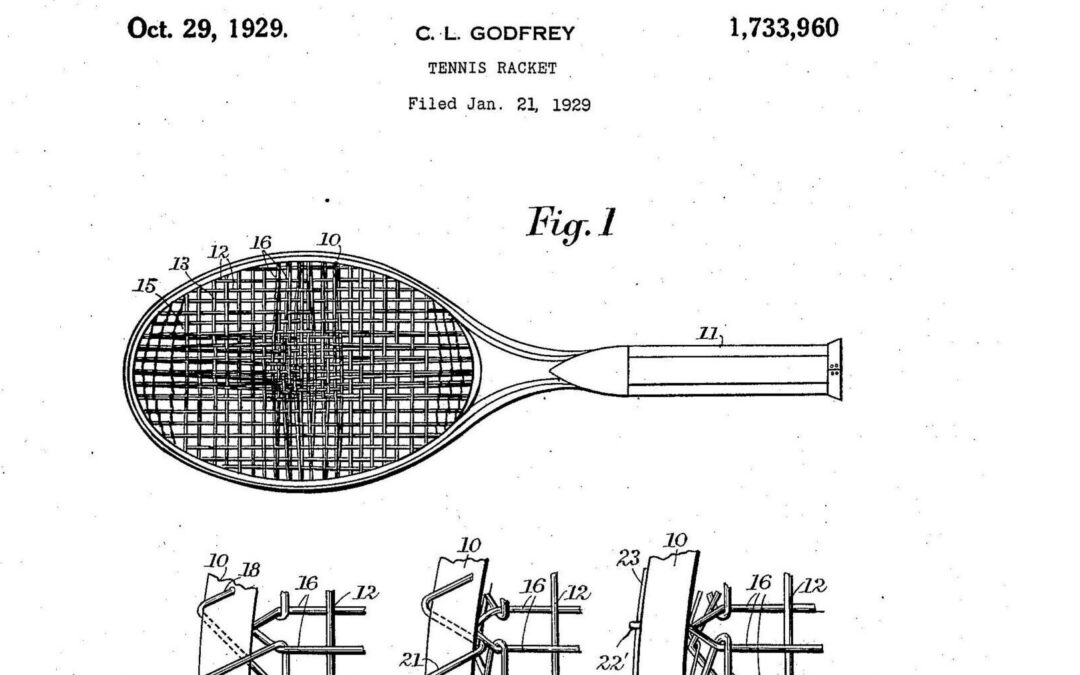
This year, we are shining a spotlight on the intersection of innovation and athletics. From cutting-edge equipment and game-changing technologies to the iconic brands that define our favorite teams, IP is the engine driving the sports industry forward.
We celebrate:
- The Creators & Inventors: Whose devotion leads to safer, faster, and more effective sports gear.
- The Storytellers: Whose copyrighted broadcasts preserve historic moments for generations.
- The Brands: The trademarks, logos, and colors that unite fans across the globe.
More Than Just a Game
The next time you lace up your running shoes or pick up a tennis racquet, take a moment to consider the genius behind them. Whether it’s a patent for a new material, a design for aerodynamics, or a trade secret that gives a brand its edge, IP doesn’t just protect ideas—it enhances the way we play and live.
Is Your Innovation Protected?
Protecting your developments is critical to staying competitive. In a fast-moving market, having the right legal partner to navigate these decisions is the ultimate “home-field advantage.”
The Law Office of Kathleen Lynch PLLC is dedicated to helping businesses like yours keep ahead of the game.
Ready to protect your vision? Your first consultation is free. 📧 Email us today: kl****@*****aw.com
by Kathleen Lynch | Apr 7, 2026 | Entrepreneurship, Infringement, Innovation, Intellectual Property, Invention, Inventor, Patent, Start Up, Start Up Considerations, US Patent Office
In patent law, making sure that all the correct inventors are named in a patent application is critical to the validity of the patent. If an inventor is incorrectly included, or if an inventor is omitted from the list of named inventors, it can result in a patent being found invalid and thus unenforceable.
This happened recently to Fortress Iron, LP (“Fortress”). This week, the U.S. Court of Appeals for the Federal Circuit ruled against Fortress in Fortress Iron, LP v. Digger Specialties, Inc.,. The case involved a couple of issued patents directed to a vertical railing panel that could be purchased as a pre-assembled panel. The idea was initially developed in 2013 by two Fortress employees in the U.S. However, the initial design had issues relating to rotation of the panel during tensioning of the cables. Fortress works with two Chinese companies, a manufacturing company and a quality control company to produce its products. An employee from the manufacturing company and an employee for the quality control company worked with Fortress to revise the railing panel design to alleviate the rotation during tensioning.
After a final design was completed, Fortress applied and obtained two patents for its vertical railing panel. Both Fortress employees were named as inventors but neither the manufacturing company employee nor the quality control company employee were named as inventors. In 2016, the quality control employee involved in the design of the railing panel left his employment and did not provide a forwarding address.
In 2021, Fortress sued Digger Specialties Inc. (“Digger”) for patent infringement of the two patents directed to the vertical railing panel. During the lawsuit, it was discovered that the two Chinese employees were omitted from the patents when they should have been included. Moreover, Fortress could not amend the patent to include the quality control employee because he left no forwarding address after his employment and could not be found.
The appeals court ruled that because Fortress was not able to name him as an inventor, the patents were invalid. Fortress was unable to assert its infringement claim against Digger because the patents were no longer valid and thus unenforceable.
What’s the takeaway here? Patent inventorship is an important consideration when filing for a patent. Inventorship is defined as a person who has contributed to the conception of the invention. Conception has been described as someone who has a definite idea of the complete invention. Because the claims of a patent define the invention, an inventor is anyone who has contributed to the conception of at least one claim in the patent. Failure to include an inventor or including a non-inventor can jeopardize the validity of your issued patent.
Protecting your innovative developments is critical to any organization. Having the right person to help you make that decision is important. The Law Office of Kathleen Lynch PLLC is designed to help businesses such as yours keep ahead of the game. The first consultation is free. Email us at kl****@*****aw.com.

by Kathleen Lynch | Mar 31, 2026 | Entrepreneur, Entrepreneurship, Innovation, Invention, Inventor, Patent, Patent Prosecution, Patentability, Small Business, Start Up, Start Up Considerations, Uncategorized, US Patent Office
A patentability search and assessment is always recommended when evaluating whether your invention would be entitled to meaningful patent protection. The search also helps to inform the inventor and patent attorney where there may be areas of more narrow protection and draft accordingly.
The United States Patent Office recently launched the AI Search Automated Pilot Program. The program is designed to evaluate the examination process by including an automated pre-examination search, and whether the inclusion will improve quality and efficiency of examinations.
The program (ASAP!) will conduct an automated search for original, noncontinuing, nonprovisional applications. The automated search results will be sent to the applicant and will provide an earlier communication regarding potential prior art issues. Under the pilot program, applicants will not be required to respond to the search results.
However, the search results may provide an opportunity to the applicant to file a preliminary amendment in an effort to place the application in a stronger position for allowance. Alternatively, the applicant may wish to file an express abandonment and obtain a fee refund in view of search results that indicate a lack of patentability.
Recently, the U.S. Patent Office has announced that it is waiving the fee requirement for any petition to participate under 37 C.F.R. 1.182 filed after March 23, 2026. This should enable self filing entrepreneurs and inventors to take advantage of this new program for free!
Capitalizing on innovative developments is critical to any organization. Having the right person to help you make those decisions is important. The Law Office of Kathleen Lynch PLLC is designed to help businesses such as yours keep ahead of the game. The first consultation is free. Email us at kl****@*****aw.com.
Photo by Szorstki on FreeImages