
by Kathleen Lynch | Apr 28, 2026 | Confidentiality, Entrepreneur, Entrepreneurship, Intellectual Property, IP, IP Management, Trade Secrets
Recently, the U.S. Court of Appeals for the Federal Circuit issued a significant reversal of a California district court’s finding of trade secret misappropriation. In the case of International Medical Devices, Inc. (IMD) v. Cornell (April 2026), the court ruled that no reasonable jury could have found several alleged trade secrets to be, in fact, “secrets.”
The Dispute: Cosmetic Penile Implants
The litigation centered on the Penuma® cosmetic penile implant. The plaintiffs alleged that four specific elements of their technology were stolen trade secrets:
- Structural Pockets: Internal voids within the implant to enhance softness and elasticity.
- Mesh Tabs: Components around the distal tip to facilitate tissue ingrowth.
- Absorbable Sutures: Used in combination with mesh tabs to hold the implant during initial healing.
- The “Supply List”: A specific list of materials and instruments used to perform the surgical implantation.
The “Death” of a Trade Secret: Public Disclosure
The Federal Circuit held that the first three alleged secrets (the structural design elements) were ineligible for protection because they had already been disclosed in prior patents.
Citing the precedent in Atl. Rsch. Mktg. Sys., Inc. v. Troy, 659 F.3d 1345, the court reaffirmed a fundamental rule of intellectual property:
“A trade secret is secret, a patent is not. That which is disclosed in a patent cannot be a trade secret.”
Because these design concepts appeared in public patent filings—some dating back decades—they were part of the public domain. You cannot claim “secrecy” over information that the government has already published for the world to see.
The Failure of Internal Protection
The fourth alleged trade secret—the list of surgical instruments—failed for a different reason: lack of reasonable efforts to maintain secrecy.
The plaintiffs had emailed this list to the defendant without any:
- Confidentiality caveats
- “Trade Secret” labels
- Explicit instructions on restricted handling
Under the California Uniform Trade Secrets Act (CUTSA), information only qualifies as a trade secret if the owner takes active, reasonable steps to keep it secret. Because the plaintiffs treated the list as ordinary correspondence in the past, they could not retroactively claim it was a protected secret during litigation.
The Takeaway: How to Protect Your Innovation
This case serves as a vital reminder for tech and medical device companies: If you have a trade secret, keep it that way.
- Audit Your Patents: Ensure you aren’t trying to protect information as a “secret” if it’s already described in your (or someone else’s) patent filings.
- Use NDAs Every Time: Never disclose sensitive information to an outside individual or organization without a signed Non-Disclosure Agreement (NDA).
- Label Everything: Mark confidential documents clearly as “Trade Secret”, “Proprietary” or “Confidential.”
- Need-to-Know Access: Limit employee access to sensitive data and provide regular training on internal security protocols.
Protect Your Innovation
Protecting your intellectual property is critical to the survival of any organization. In an evolving legal landscape, having the right counsel to navigate these decisions is more important than ever.
The Law Office of Kathleen Lynch PLLC is designed to help your business stay ahead of the game.
Your first consultation is free. Email us: kl****@*****aw.com
by Kathleen Lynch | Apr 21, 2026 | Entrepreneur, Entrepreneurship, Innovation, Intellectual Property, International, Invention, Inventor, IP, Logo, Patent, Protection, Service Mark, Trade Dress, Trade Name, Trade Secrets, Trademark, Uncategorized
Sunday, April 26th is World Intellectual Property Day. Established in 2000 by the World Intellectual Property Organization. (WIPO), this day serves a vital purpose: to pull back the curtain on the world of intellectual property (IP) and show how it shapes our daily lives.
This Year’s Theme: The Spirit of Sport
This year, we are shining a spotlight on the intersection of innovation and athletics. From cutting-edge equipment and game-changing technologies to the iconic brands that define our favorite teams, IP is the engine driving the sports industry forward.
We celebrate:
- The Creators & Inventors: Whose devotion leads to safer, faster, and more effective sports gear.
- The Storytellers: Whose copyrighted broadcasts preserve historic moments for generations.
- The Brands: The trademarks, logos, and colors that unite fans across the globe.
More Than Just a Game
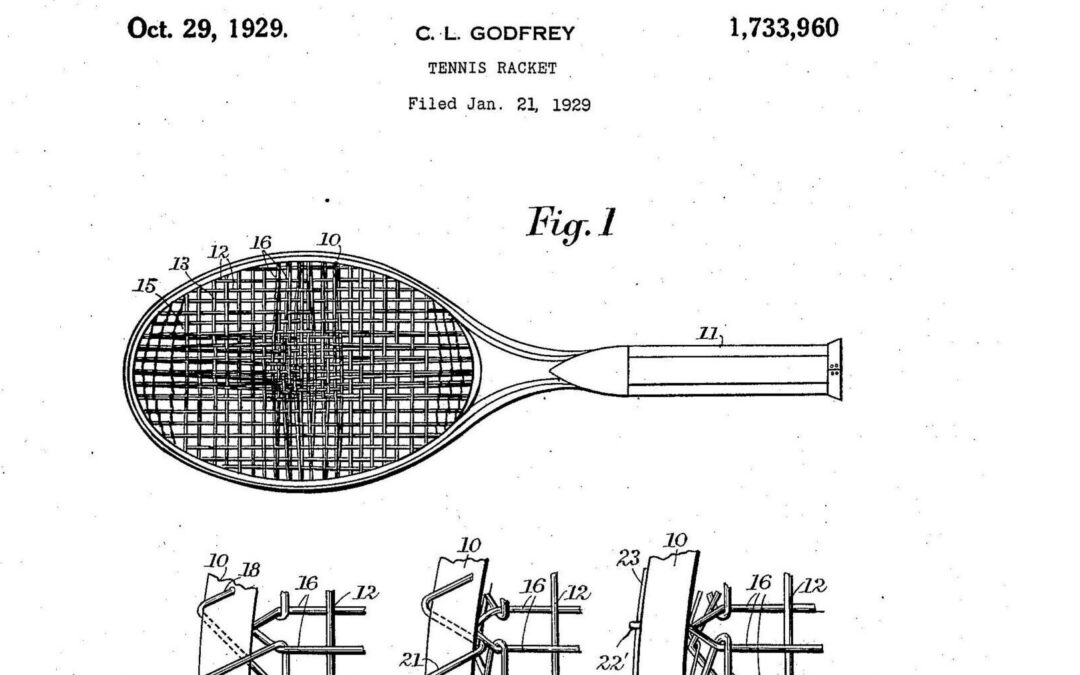
The next time you lace up your running shoes or pick up a tennis racquet, take a moment to consider the genius behind them. Whether it’s a patent for a new material, a design for aerodynamics, or a trade secret that gives a brand its edge, IP doesn’t just protect ideas—it enhances the way we play and live.
Is Your Innovation Protected?
Protecting your developments is critical to staying competitive. In a fast-moving market, having the right legal partner to navigate these decisions is the ultimate “home-field advantage.”
The Law Office of Kathleen Lynch PLLC is dedicated to helping businesses like yours keep ahead of the game.
Ready to protect your vision? Your first consultation is free. 📧 Email us today: kl****@*****aw.com

by Kathleen Lynch | Apr 14, 2026 | Copying, Copyright, Infringement, Intellectual Property, Internet, Litigation, Small Business
In a major blow to copyright holders, a recent high stakes battle between Cox Communications and Sony Music Entertainment has redefined the boundaries of internet service provider (ISP) liability.
The Background: 163,000 Red Flags
As an ISP, Cox provides the “pipes” for the internet. Sony, representing various music copyright owners, employed the firm MarkMonitor to track illegal downloads. Over a two-year period, Sony sent Cox approximately 163,000 notices identifying specific IP addresses associated with copyright infringement.
Despite these thousands of notices, the infringing activity continued. Sony sued Cox in federal district court on two counts:
- Contributory Infringement: Claiming Cox contributed to the users’ illegal activity.
- Vicarious Liability: Claiming Cox was responsible for the infringement occurring on its network.
The initial jury found Cox liable on both counts. However, upon appeal, the Fourth Circuit Court of Appeals delivered a split decision: it affirmed the contributory infringement but reversed the vicarious liability.
The Ruling: Intent is Everything
The Supreme Court ultimately held that Cox was not liable for contributory infringement. The reasoning? Cox did not intend for its service to be used for illegal downloading.
The court found that:
- Cox did not actively induce users to infringe.
- The service was not “tailored” specifically for copyright
- Providing a general-purpose tool (internet access) that can be used for infringement is not the same as intending for it to happen.
The Takeaway: Knowledge vs. Intent
The court’s decision essentially looked past the fact that Cox received 163,000 notices and did nothing. The takeaway for IP owners is clear: To prevail on contributory infringement, you must prove intent. Simply knowing that a service can be used for infringing activity—or even being told it is being used that way—may no longer be enough to hold a service provider liable if the service has substantial non-infringing uses. In this case, the court decided that “knowing” wasn’t “doing.”
Protect Your Innovation
Protecting your intellectual property is critical to the survival of any organization. In a changing legal landscape, having the right counsel to help you navigate these decisions is more important than ever.
The Law Office of Kathleen Lynch PLLC is designed to help your business stay ahead of the game.
Your first consultation is free. Email us: kl****@*****aw.com
by Kathleen Lynch | Apr 7, 2026 | Entrepreneurship, Infringement, Innovation, Intellectual Property, Invention, Inventor, Patent, Start Up, Start Up Considerations, US Patent Office
In patent law, making sure that all the correct inventors are named in a patent application is critical to the validity of the patent. If an inventor is incorrectly included, or if an inventor is omitted from the list of named inventors, it can result in a patent being found invalid and thus unenforceable.
This happened recently to Fortress Iron, LP (“Fortress”). This week, the U.S. Court of Appeals for the Federal Circuit ruled against Fortress in Fortress Iron, LP v. Digger Specialties, Inc.,. The case involved a couple of issued patents directed to a vertical railing panel that could be purchased as a pre-assembled panel. The idea was initially developed in 2013 by two Fortress employees in the U.S. However, the initial design had issues relating to rotation of the panel during tensioning of the cables. Fortress works with two Chinese companies, a manufacturing company and a quality control company to produce its products. An employee from the manufacturing company and an employee for the quality control company worked with Fortress to revise the railing panel design to alleviate the rotation during tensioning.
After a final design was completed, Fortress applied and obtained two patents for its vertical railing panel. Both Fortress employees were named as inventors but neither the manufacturing company employee nor the quality control company employee were named as inventors. In 2016, the quality control employee involved in the design of the railing panel left his employment and did not provide a forwarding address.
In 2021, Fortress sued Digger Specialties Inc. (“Digger”) for patent infringement of the two patents directed to the vertical railing panel. During the lawsuit, it was discovered that the two Chinese employees were omitted from the patents when they should have been included. Moreover, Fortress could not amend the patent to include the quality control employee because he left no forwarding address after his employment and could not be found.
The appeals court ruled that because Fortress was not able to name him as an inventor, the patents were invalid. Fortress was unable to assert its infringement claim against Digger because the patents were no longer valid and thus unenforceable.
What’s the takeaway here? Patent inventorship is an important consideration when filing for a patent. Inventorship is defined as a person who has contributed to the conception of the invention. Conception has been described as someone who has a definite idea of the complete invention. Because the claims of a patent define the invention, an inventor is anyone who has contributed to the conception of at least one claim in the patent. Failure to include an inventor or including a non-inventor can jeopardize the validity of your issued patent.
Protecting your innovative developments is critical to any organization. Having the right person to help you make that decision is important. The Law Office of Kathleen Lynch PLLC is designed to help businesses such as yours keep ahead of the game. The first consultation is free. Email us at kl****@*****aw.com.

by Kathleen Lynch | Mar 31, 2026 | Entrepreneur, Entrepreneurship, Innovation, Invention, Inventor, Patent, Patent Prosecution, Patentability, Small Business, Start Up, Start Up Considerations, Uncategorized, US Patent Office
A patentability search and assessment is always recommended when evaluating whether your invention would be entitled to meaningful patent protection. The search also helps to inform the inventor and patent attorney where there may be areas of more narrow protection and draft accordingly.
The United States Patent Office recently launched the AI Search Automated Pilot Program. The program is designed to evaluate the examination process by including an automated pre-examination search, and whether the inclusion will improve quality and efficiency of examinations.
The program (ASAP!) will conduct an automated search for original, noncontinuing, nonprovisional applications. The automated search results will be sent to the applicant and will provide an earlier communication regarding potential prior art issues. Under the pilot program, applicants will not be required to respond to the search results.
However, the search results may provide an opportunity to the applicant to file a preliminary amendment in an effort to place the application in a stronger position for allowance. Alternatively, the applicant may wish to file an express abandonment and obtain a fee refund in view of search results that indicate a lack of patentability.
Recently, the U.S. Patent Office has announced that it is waiving the fee requirement for any petition to participate under 37 C.F.R. 1.182 filed after March 23, 2026. This should enable self filing entrepreneurs and inventors to take advantage of this new program for free!
Capitalizing on innovative developments is critical to any organization. Having the right person to help you make those decisions is important. The Law Office of Kathleen Lynch PLLC is designed to help businesses such as yours keep ahead of the game. The first consultation is free. Email us at kl****@*****aw.com.
Photo by Szorstki on FreeImages