by Kathleen Lynch | Jan 18, 2016 | Entrepreneurship, Innovation
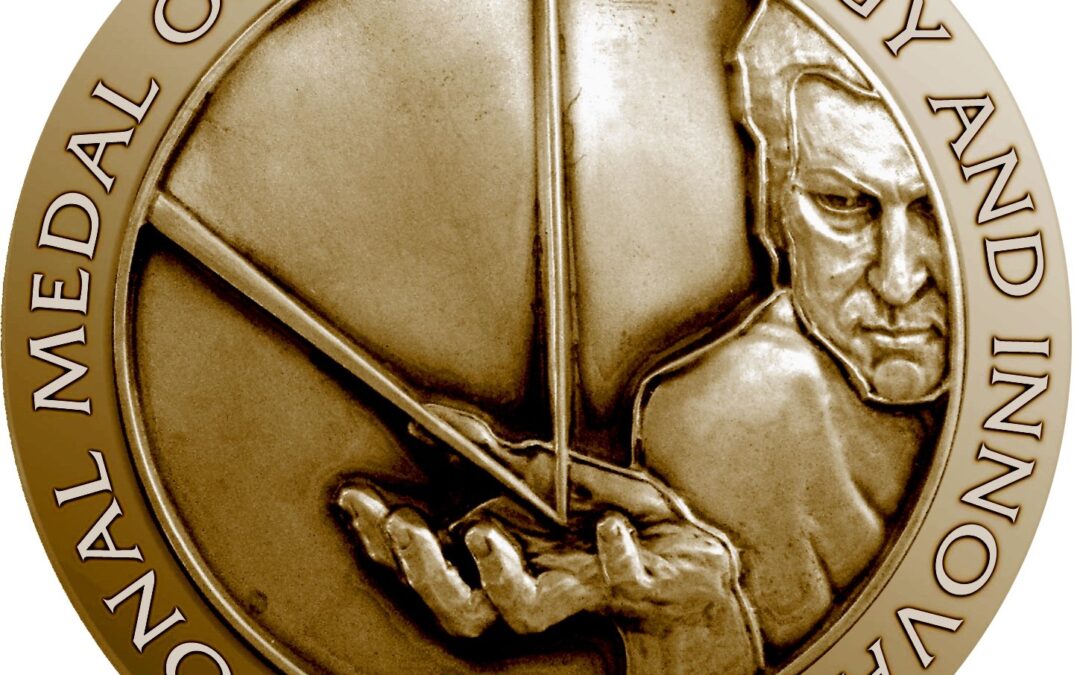
Last month President Obama awarded the National Medals of Science, as well as the National Medals of Technology and Innovation to a number of recipients. Among the recipients of the National Medal of Technology and Innovation was a UNC professor, Joseph DeSimone.
Mr. DeSimone is the founder of Carbon3D. He has taken a sabbatical from UNC to focus on his company which is developing new 3D printing technology.
The Carbon3D process, referred to as CLIP, is a chemical process the uses light and oxygen to eliminate the mechanical steps used in standard 3D printing. The process projects light through an oxygen-permeable window into a bed of UV curable resin. The object is lifted out of the resin bath as it is grown. The process enables the 3D printing speeds to increase substantially and enhance the quality as well. Check out their video.
Protecting your innovative developments is critical to any organization. Having the right person to help you make that decision is important. The Law Office of Kathleen Lynch PLLC is designed to help businesses such as yours keep ahead of the game. The first telephone consultation is free. Email us at kl****@*****aw.com.

by Kathleen Lynch | Dec 18, 2015 | Entrepreneurship, Innovation
The last of the Regional Patent Offices is up and running. Under Secretary of Commerce for Intellectual Property and Director of the United States Patent and Trademark Office (USPTO), Michelle Lee recently attended a ribbon cutting ceremony to open the Texas Region Office of the USPTO.
The Texas Regional Office is the last of the satellite offices for the USPTO. Others are located in Detroit, Silicon Valley and Denver. The satellite offices were opened to help recruit talented patent examiners from around the country, help decrease the backlog of patent cases to be examined, and to establish offices of expertise.
The addition of four patent offices has decreased the average time to examination and to issue. In addition, the regional patent offices have enable the USPTO to hire patent examiners with the expertise needed to handle areas of advanced and cutting edge areas of technology. The regional patent offices also offer services to small businesses and entrepreneurs that will be offered to the communities in each of the regional areas.
A statement recently released by the USPTO describes the importance of the regional offices by recognizing that “it’s important to ensure the USPTO can engage effectively with communities, industries, and innovators. The USPTO’s regional offices play a crucial role in these efforts, assisting inventors, entrepreneurs, and small businesses in their respective regions, while supporting the USPTO’s core mission of fostering American innovation and competitiveness.”
Identifying, protecting and leveraging intellectual property is critical to any organization. Having the right person to help you make those decisions is important. The Law Office of Kathleen Lynch PLLC is designed to help businesses such as yours keep ahead of the game. The first telephone consultation is free. Email us at kl****@*****aw.com.

by Kathleen Lynch | Dec 10, 2015 | Entrepreneurship, Innovation
A recent article in Bloomberg News poses the question: do we already have the technology needed to solve global warming? Representatives from all over the world are finishing up in Paris trying to agree on climate accord. Entrepreneurs and investors are ready to tackle the challenges regardless.
Wealthy donors agreed to invest $2 billion for development in the area of clean energy research. Twenty of the world’s largest economies agreed to increase their R&D spending on new energy by at least 200%. Clean-energy patents have significantly increased in the US in recent years.
The recent focus on climate saving technology and the need to reduce global warming has reopened the divide between two schools of thought: should we invent new technologies or deploy effective ideas that already exist?
One clean-energy entrepreneur Jigar Shah submits that all of the technology needed to solve the global warming crisis is already here. Some technologies include sharing economy businesses such as Uber and Airbnb, but others include companies that reward good behavior or that make wearable sensors that interact with a smartphone to report air quality in the immediate vicinity.
One of Pure Energy’s managing partners, Nicholas Eisenberger, states that there’s an “unloved, unnoticed tech center that’s up and coming and that can do a big part of the job, too. Why isn’t there more attention to this?”
Capitalizing on innovative developments is critical to any organization. Having the right person to help you make those decisions is important. The Law Office of Kathleen Lynch PLLC is designed to help businesses such as yours keep ahead of the game. The first telephone consultation is free. Email us at kl****@*****aw.com.
by Kathleen Lynch | Oct 7, 2015 | Entrepreneurship
Socrates once said “the way to a good reputation is to be what you desire to appear.” For one man, he wanted to be a named inventor.
In an action against his former employer, Seagate, Mr. Shukh filed an action in federal district court charging that his reputation was harmed by Seagate’s failure to include him as an inventor on 6 Seagate patents. The district court dismissed the action finding that Mr. Shukh did not provide sufficient evidence to support his case. However, the Federal Circuit Court of Appeals that hears patent cases, vacated the lower court’s decision. The court found that “being considered an inventor of important subject matter is a mark of success in one’s field comparable to being an author of an important scientific paper.”
What’s the take away here? If you are an inventor, and you are not identified as such on a patent application or issued patent, you may have a case against your employer based on harm to your reputation. As the court stated, if you are correctly an inventor of important subject matter, being recognized as such is a mark of professional success. Failure to be properly included as an inventor may harm one’s reputation which may be actionable.
Capitalizing on innovative developments is critical to any organization. Having the right person to help you make those decisions is important. The Law Office of Kathleen Lynch PLLC is designed to help businesses such as yours keep ahead of the game. The first telephone consultation is free. Email us at kl****@*****aw.com.

by Kathleen Lynch | Aug 18, 2015 | Entrepreneurship, Innovation, Patent Prosecution
Recently I’ve found websites and blog posts promoting your ability to conduct your own patent search. Unless your invention is extremely straightforward, I would not recommend doing that.
The U.S. Patent Office was created in 1802. As such, issued patents were organized by categories or classes and subclasses. As innovation has evolved, the categories of classes and subclasses has evolved and changed considerably. Unless you are extremely familiar with the patent records organization, you are better off spending your money on a professional searcher who will find all of the relevant categorical nooks and crannies. Often times a material, process or structure in your invention may have applicability in areas you have not considered. These need to be identified and pursued in order to obtain a full and thorough search.
Patentability must be based on a complete search to have value. If not, you are spending good money after bad by investing in the preparation and filing of a patent application based on incomplete patent search results. You are better off knowing that your invention is unpatentable than spending money on the preparation and filing of a meaningless application. In addition, your application, and particularly your claims, can be tailored to that patentable space defined not only by your invention but by the relevant prior art found in a good search.
Capitalizing on innovative developments is critical to any organization. Having the right person to help you make those decisions is important. The Law Office of Kathleen Lynch PLLC is designed to help businesses such as yours keep ahead of the game. The first telephone consultation is free. Email us at kl****@*****aw.com.

by Kathleen Lynch | Aug 11, 2015 | Entrepreneurship, Innovation, Start Up Considerations
Joseph Tierney, is a well known street artist known as “Rime”. He sued fashion designer, Jeremy Scott and high-end Italian apparel brand, Moschino over the dress Katy Perry wore to the Metropolitan Museum of Art’s Met Gala in May.
Rime accused Moschino and Scott of copying one his giant murals entitled “Vandal Eyes,” which is now located on the side of a Detroit building, and displaying the mural on Perry’s dress. The name and signature of Rime were also on the dress. The dress and mural can be seen here.
Rime is bringing copyright, unfair competition and publicity rights claims against Moschino and Scott.
Rime states that the dress, which violated his rights, was also worn by supermodel Gigi Hadid at a the February 2015 Moschino runway show in Milan. In addition, photos of the dress are on the company’s websites as well as social media. Court documents reference The Wall Street Journal as reporting Moschino experienced a 16 percent increase in revenue for the first quarter of 2015.
Rime is asking the court to stop any further marketing or sale of the dresses as well as all profits made from the sale or any dresses, and other monetary damages.
What’s the take away here? Don’t copy someone else’s material. If you find something you like, ask if you can use it. If you cannot, create something yourself or go elsewhere.
Protecting your innovative developments is critical to any organization. Having the right person to help you make that decision is important. The Law Office of Kathleen Lynch PLLC is designed to help businesses such as yours keep ahead of the game. The first telephone consultation is free. Email us at kl****@*****aw.com.