by Kathleen Lynch | May 11, 2013 | Patent
One provision in the America Invents Act enables a third party to submit to the U.S. Patent Office prior art patent references and publications relevant to a published application. This can be done in for up to six months from publication, before the first Office Action, or notice of allowance, the latter of the three. The party submitting the information must point out the relevance of the patent references and publications. A party may submit up to three references without cost. After that, the cost is $180 for ten.
This new procedure enables anyone to provide further insight and assist with ensuring that the patentability hurdle is cleared. However, this can also prove to be a double edged sword. If a submission is reviewed by the patent examiner and the patent issues, then the weight and deference given to the examination process may prejudice any subsequent challenges after issuance. As a result, pre-grant submissions should be carefully considered before filing.
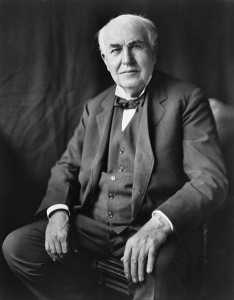
Companies should have in place or begin structuring a review or “watch” process or system. This would track areas of technology relevant to corporate interests, including particular known inventors, and competitor companies (although assignments may not be in place by publication date and may prove to be more difficult to track). This system will help companies to keep track of what is in the patent pipeline and to prepare for a pre-grant submission if it is deemed appropriate. As Thomas Edison once said “good fortune often happens when opportunity meets with preparation.” So, when it comes to pre-grant submissions, be prepared.

by Kathleen Lynch | Apr 24, 2013 | Patent
We hear a lot these days about cost cutting and austerity. I also hear a bit of grousing from time to time from people who use IP legal services about costs. I believe inventors and companies can find reasonably priced intellectual property law services when the potential client does her homework.
First, check out smaller cities, towns and suburbs. Larger cities have higher overhead costs. Firms pay more for rent, salaries etc. Smaller cities and towns have many talented patent firms, attorneys and agents equally qualified to do the work at more reasonable rates.
If you are focusing on patent preparation and prosecution, you don’t need to stay in your own backyard. With the internet, Skype, and all of the wonderful modern tools of connectedness, your patent agent or attorney can be as close or as far away as you want them to be. Documents are easily exchanged via the internet, and telephone and video conferences can connect folks who are time zones apart. Where there is a significant distance, time zones may become an issue, but you will find that most patent attorneys and agents are willing to provide the necessary flexibility to make the relationship work, including trips to your offices at a discount or gratis in exchange for keeping your business.
Background matters. Take a look and ask questions about what kind of work your patent attorney does. What was his or her major in college? Did they work as a scientist or engineer before they practiced patent law? If so, what did they do? What is the focus of their present practice? If you are looking for someone to prepare and file a patent application, you don’t want to work with someone whose experience is limited to patent litigation. Just like you wouldn’t allow your internist to perform heart surgery, you don’t want someone with a chemistry background preparing patent applications for you if you are in the high tech industry. Find someone who has the technical background suited to your project, as well as the experience needed to meet your needs. In looking for possible patent attorneys or agents, check out the US Patent and Trademark website which enables you to search either for a particular person or those registered to practice before the US Patent Office in a particular location. Once you have that, check out their credentials and ask questions before you make your decision.
Selecting the right patent attorney is important to ensure your patent strategy is managed by someone with the appropriate experience and background. The Law Office of Kathleen Lynch PLLC has over 20 years of experience in the preparation and prosecution of patent applications and is designed to help businesses such as yours keep ahead of the game. The first telephone consultation is free. Email us at kl****@*****aw.com.

by Kathleen Lynch | Mar 16, 2013 | Patent
There may be times when deciding not to seek patent protection is appropriate, and will likely provide you with a stronger competitive advantage. To help you decide whether seeking patent protection on your latest development is worthwhile, consider the following.
First, can your invention be easily reverse engineered? If it cannot, then keeping your invention a trade secret and refraining from filing a patent application may be appropriate. When a patent application is filed, even if a patent is not ultimately granted, your application will usually be published 6 months from the date of filing of a utility application, unless you request otherwise, pay an extra fee and not seek protection outside the US. To avoid wide dissemination of your invention, not filing for patent protection may be the better route.
Is your invention a method? If it is, methods are more difficult to enforce when faced with possible patent infringement. As the patentee of the method, you must show that the alleged infringer is practicing your methodology. If this is not easily determined, enforcing your patent rights may prove challenging.
Could your invention be protected by trade secret? Methods and other innovative developments may be just as easily protected by trade secret. This first involves developing an organizational plan to protect trade secrets, educating everyone involved on all aspects of the plan (including contract workers and the like), and fully implementing the plan. Elements of any plan to protect trade secrets would involve limiting access to areas where proprietary methods are practiced, and educating and reminding workers of their obligations of confidentiality.
Will the technology be around in 5 or 10 years? If not, perhaps the investment is better spent in areas such as trade secret protection and marketing. If you are the first one out there with a new and different methodology that will likely be replaced in a few years, your competitive advantage may be being the first to market, exploiting that opportunity fully, and moving forward with the next generational product or process.
Keep in mind, once a trade secret is out, it is lost forever. If there was a breach of disclosure, there may be damages that could be obtained and possible injunctive relief obtained from the wrongfully disclosing party. However, the secret cannot be retracted. This aspect should also be considered in making that decision.