by Kathleen Lynch | Sep 23, 2014 | Design Patent, Patent
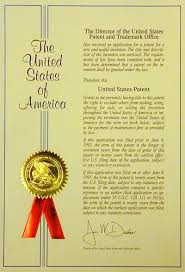
This is the first in a series of basic info posts on the basics of intellectual property law. In particular, I’d like to focus on what is a patent and what kind of protection does it provide if you are able to obtain a granted patent.
To start, there are 3 types of patents: utility, design and plant. Design patents cover new and ornamental aspects of items of manufacture. An iPhone® smart phone or a Corvette® sports car are great examples of design patents. These have a life of 14 years from the date the patent is granted.
Plant patents are a particular type of patent that are directed to anyone who has invented or discovered and asexually reproduced a distinct and new variety of plant. Plant patent protection extends 20 years from the date of filing.
Utility patents are known to most people and cover articles of manufacture, methods of manufacture, compositions of matter, and business methods, typically used in the software and banking sectors. This last category of patents is presently in dispute but is not the subject of this article.
A utility patent must be useful, novel and nonobvious. A utility patent has a life of 20 years from the date of filing. However, once a patent is granted, maintenance fees must be paid to the US Patent and Trademark Office before 3.5, 7.5 and 11.5 years after issue, or the patent will expire.
Protecting your innovative developments is critical to any organization. Having the right person to help you make that decision is important. The Law Office of Kathleen Lynch PLLC is designed to help businesses such as yours keep ahead of the game. The first telephone consultation is free. Email us at kl****@*****aw.com.
by Kathleen Lynch | Aug 26, 2014 | Confidentiality, Entrepreneur, Intellectual Property, Inventor, Patent, Trade Secrets
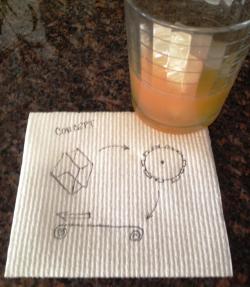
I had lunch with a colleague who is an IP attorney and an engineer. He was telling me about his participation in a start up weekend and all of the challenges and fun that he had. In hearing this, we discussed, as patent attorneys do, the consequences of disclosing ideas to a loosely held group of people whose only relationship to each other is on the back of a napkin.
Most start up weekends do not impose any obligation of confidentiality on their attendees for all that is developed and disclosed in a 48 hour period. This raised the concern that perhaps anything that is developed that may be rather meaningful, i.e. might lead to actual commercialization of a product or service, may need to be “black boxed”. In other words, the team of developers could agree to disclose only the basic outline of the structure and/or function of the development and then disclose the details of the operation once a patent application has been filed or a confidentiality agreement has been signed.
To do otherwise may jeopardize the group’s ability to seek meaningful protection which may likely translate directly into meaningful funding. The US patent system has moved to a first inventor to file system. In that system, the inventor has a year to file on the invention developed after it has been disclosed. The rest of the world essentially requires absolute novelty. So if any invention is disclosed prior to a patent filing, any international patent rights outside the US may be lost completely. This is something worth considering when venturing into a start up weekend.
One aspect of any new development is the extent of patent protection available to the ultimate product or service. If all international patent protection is lost by the close of a start up weekend as a result of disclosure, then the level of funding and any significant patent advantage may be lost. It remains that anyone involved in a start up weekend should ask the appropriate questions regarding disclosure with the organizers and raise any concerns with the team as it could impact the protection and funding of what may be developed during the weekend.
Protecting your innovative developments is critical to any start up venture. Having the right person to help you make that decision is important. The Law Office of Kathleen Lynch PLLC is designed to help businesses such as yours keep ahead of the game. The first telephone consultation is free. Email us at kl****@*****aw.com.

by Kathleen Lynch | Aug 19, 2014 | Entrepreneur, Patent
I am taking a break this week in my usual focus on intellectual property law, to give a shout out to the NCLEAP program here in North Carolina. I preface this by disclosing that I am an NCLEAP volunteer and sit on their steering committee.
NCLEAP (North Carolina Lawyer Entrepreneurial Assistance Program) is about a 7 year program that was established by North Carolina lawyers to provide pro bono assistance to low income entrepreneurs. Since its inception, it has assisted over 1000 entrepreneurs and small businesses. Volunteer lawyers from across the state provide low income entrepreneurs with pro bono corporate and intellectual property law advice and other legal matters relevant to a start up venture.
NCLEAP relies on donations to operate. If you are a lawyer licensed to practice in North Carolina, consider donating your time and expertise to help out a new business or entrepreneur. If you like the NCLEAP program, consider making a donation.

by Kathleen Lynch | Jul 22, 2014 | Examiner, Patent, Prosecution
The US Patent Office is expanding its Patent Examiner Technical Training Program. The Patent Office is seeking voluntary assistance from technologists, scientists, engineers, and other experts from industry and academia to participate as guest lecturers and provide technical training and expertise to patent examiners regarding the state of the art.
Guest lecturers must have relevant, historic and current technical knowledge, including industry practices/standards in technological areas of interest. Guest lecturers must also have relevant technical knowledge, as well as familiarity with prior art and industry practices/standards in areas of technologies where such lectures would be beneficial.
So if you or someone you know has expertise or knowledge in a cutting edge area of technology, here’s a chance to help an examiner out.
Having the right person to help you identify and protect your intellectual assets is critical. The Law Office of Kathleen Lynch is designed to help businesses such as yours keep ahead of the game. The first telephone consultation is free. Email us at kl****@*****aw.com.
by Kathleen Lynch | Jun 2, 2014 | Patent
Attention starving entrepreneurs, college students and all others with not much other than a great idea. As part of the recently enacted America Invents Act, the US Patent Office is developing a patent pro bono program. The US Patent Office, in conjunction with state bar associations around the country, will help pair qualified individuals with patent attorney volunteers who will assist in helping to obtain patent protection. Currently, at least part or all of 20 states have pro bono programs offering assistance, with more slated to begin operation within 2014 and 2015. The current pro bono programs are limited to residents of:
Alaska Arizona California Colorado Delaware District of Columbia Idaho Hawaii Louisiana Maryland Massachusetts Minnesota Nevada New York North Carolina Ohio Oregon Pennsylvania Texas Virginia Washington Wyoming
If you are a resident of one of the states is listed above, Pro-bono assistance is now available, to be considered and apply go to the Federal Circuit Bar Association National Clearing House.
If your resident state is not listed above please do not apply for assistance at this time. The North Carolina Bar Association has begun accepting applications. Go to the NCLEAP (North Carolina Lawyers for Entrepreneurs Assistance Program) page of the North Carolina Bar Association website.
To apply, the Federal Circuit website will ask for basic information about your invention, including a brief description, to help in the referral process. Should your application pass the first level of screening at the national clearinghouse, it will be forwarded to the appropriate regional program. All following correspondence will come from the regional program.
Acceptance into a state or regional pro bono program requires each potential pro bono client to be screened for certain criteria. Some of these criteria include:
- Gross household income – region dependent, but most limited to 300% of the poverty levels
- Example 1 – a single person could have an income of up to $34,470 (3 times the current single person poverty level of $11,490);
- Example 2 – a family of 4 could have a gross income of up to $70,650 (3 times the current family of 4 poverty level of $23,550).
- Knowledge of the patent system – demonstrated by having an application on file with the USPTO or by successfully completing the certificate training course. Many regional pro bono programs require successful completion of the certificate training to be considered for the program.
- Having an invention, not merely an idea – to demonstrate that there is an invention one should be able to describe the invention so that someone could make and use the invention.
There may be additional requirements imposed by the state or local organization working with the US Patent Office. Once you have cleared these hurdles you will be put in touch with a local bar association and paired with a volunteer patent attorney who will help you to prepare, file, prosecute and hopefully obtain your patent.

by Kathleen Lynch | Jul 8, 2013 | Patent
Usually the Patent Office website provides a gateway to other information, such as a patent or trademark search information, related forms, general information, etc. However, on the home page, there are news items and information worth checking out. One of those is the IP Awareness Assessment Tool. This tool provides basic information for inventors and small businesses to help identify IP needs. In particular, the tool is a series of questions posed to help you understand what IP you may have and/or what IP you may want to protect. For example, you may think that you may need a copyright registration to protect your marketing material, but in fact, it might be more appropriately addressed and protected by trademark or service mark registration.
Having checked out the pre-assessment tool myself, I think it is a helpful starting point to those who are individual entrepreneurs, or small businesses who have not yet sought any IP advice. However, I would not rely on the tool alone and would seek advise from an attorney experienced in IP issues.