
by Kathleen Lynch | Aug 25, 2015 | Trademark Service Mark
Michael Jordan was recently awarded almost nine million in damages after a supermarket used his name and likeness without his permission. Jordan sued Dominick’s Grocery store after it ran an advertisement promoting a $2 off coupon for steak. The advertisement read “Congratulations Michael Jordan, you are a cut above.” Jordan’s jersey number 23 was also displayed.
Jordan sued alleging that Dominick’s did not have his consent to use his name or his jersey number in connection with their advertisement and coupon. He asserted that he did not endorse the use of his name in connection with the promotion. The court agreed and awarded him 8.9 million dollars.
What’s the take away here? Protect your brand. Michael Jordan worked hard to become an uber famous basketball player and personality. Except for newsworthy items, Michael Jordan has every right to ensure that his name, jersey number and likeness are only used in a manner that he controls. Regardless of how complimentary a promotion may be, you cannot use another’s name, likeness or their affiliation (in this case, Michael’s jersey number) to promote your business.
Protecting your brand and other innovative developments is critical to any organization. Having the right person to help you make that decision is important. The Law Office of Kathleen Lynch PLLC is designed to help businesses such as yours keep ahead of the game. The first telephone consultation is free. Email us at kl****@*****aw.com.

by Kathleen Lynch | Aug 11, 2015 | Entrepreneurship, Innovation, Start Up Considerations
Joseph Tierney, is a well known street artist known as “Rime”. He sued fashion designer, Jeremy Scott and high-end Italian apparel brand, Moschino over the dress Katy Perry wore to the Metropolitan Museum of Art’s Met Gala in May.
Rime accused Moschino and Scott of copying one his giant murals entitled “Vandal Eyes,” which is now located on the side of a Detroit building, and displaying the mural on Perry’s dress. The name and signature of Rime were also on the dress. The dress and mural can be seen here.
Rime is bringing copyright, unfair competition and publicity rights claims against Moschino and Scott.
Rime states that the dress, which violated his rights, was also worn by supermodel Gigi Hadid at a the February 2015 Moschino runway show in Milan. In addition, photos of the dress are on the company’s websites as well as social media. Court documents reference The Wall Street Journal as reporting Moschino experienced a 16 percent increase in revenue for the first quarter of 2015.
Rime is asking the court to stop any further marketing or sale of the dresses as well as all profits made from the sale or any dresses, and other monetary damages.
What’s the take away here? Don’t copy someone else’s material. If you find something you like, ask if you can use it. If you cannot, create something yourself or go elsewhere.
Protecting your innovative developments is critical to any organization. Having the right person to help you make that decision is important. The Law Office of Kathleen Lynch PLLC is designed to help businesses such as yours keep ahead of the game. The first telephone consultation is free. Email us at kl****@*****aw.com.
by Kathleen Lynch | Aug 6, 2015 | Entrepreneurship, Innovation, IP Management, Patent Prosecution
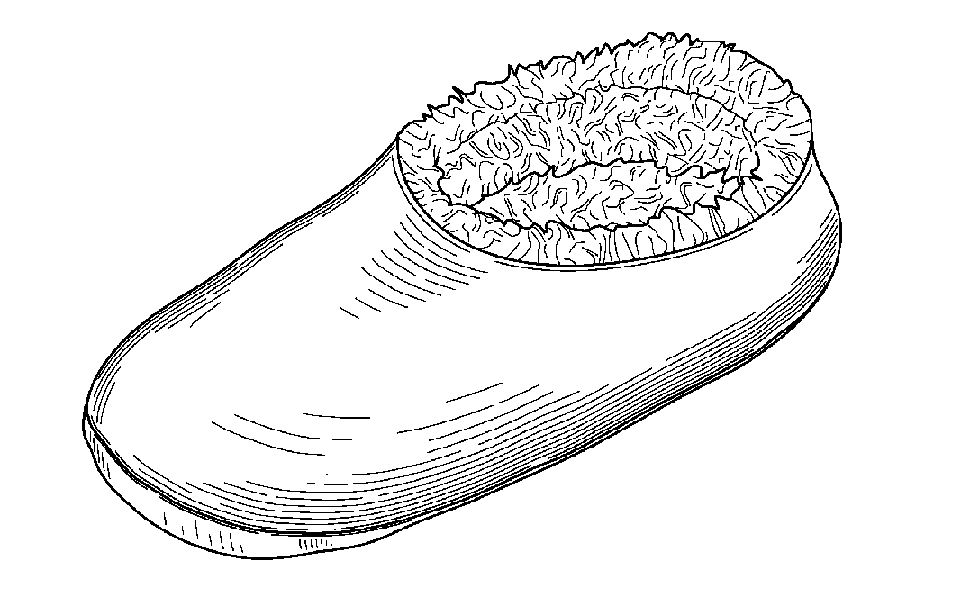
(I have to admit I picked this case in part on the name, Fuzzy Babba. )
Walmart sells a similar fuzzy slipper under the mark “Fuzzy Babba™.” Buyer’s Direct sued Walmart and others for infringing their design patent directed to a slipper that Buyer’s Direct sells under the mark “Snoozies”. In their defense, Walmart and others claimed that the patent was invalid because it was an obvious variation on slipper designs in existence at the time the patent application was filed.
A Federal District Court in New York City found in favor of the accused infringers, Walmart, Sears and High Point Design. The court found that the differences between the design patent and other slipper designs were obvious variations and that the patent was invalid.
What’s the take away here? Be very sure of the strength of your patent when you assert it against an alleged infringer. The first defense is often an attack on the patent itself. If the accused infringers prevail, your patent may be invalidated and any rights associated with it are lost.
Advising on intellectual property issues is critical to any organization. Having the right person to help you make that decision is important. The Law Office of Kathleen Lynch PLLC is designed to help businesses such as yours keep ahead of the game. The first telephone consultation is free. Email us at kl****@*****aw.com.

by Kathleen Lynch | Jul 14, 2015 | Innovation
A California jury awarded a cardiologist $200 million dollars against Boston Scientific. The jury heard the patent infringement and licensing lawsuit filed by Dr. David Jang who developed two cardiac stents for Boston Scientific. The jury found in favor of Dr. Jang and awarded him $200 million dollars in damages. The jury determined that the medical device company breached its contract with Dr. Jang and infringed two patent claims.
In 2002, Dr. Jang licensed two stent patents to Boston Scientific in exchange for $50 million upfront and an additional $110 million contingent on sales of stents that incorporate his patents. In 2005, Dr. Jang sued Boston Scientific for breaching the license agreement and claimed that Boston Scientific failed to make payments required by the terms of the agreement. Dr. Jang alleged the company owed him just under $100 million for using his patented products, and with interest at about 12 percent a year, would bring that amount to more than $200 million.
What’s the take away here? First, a patent is only as good as your ability to enforce it. Here, the good doctor was able to stand his ground against a large opponent and prevail. Second, your ability to prevail in an infringement action may take longer than you would ever want. But patience may be a virtue in patent infringement actions, especially if the facts favor your cause.
Protecting your innovative developments is critical to any organization. Having the right person to help you through that process is important. The Law Office of Kathleen Lynch PLLC is designed to help businesses such as yours keep ahead of the game. The first telephone consultation is free. Email us at kl****@*****aw.com.

by Kathleen Lynch | Jun 30, 2015 | Innovation, IP Management
Recently, the U.S. Supreme Court confirmed a lower court ruling for Marvel Entertainment relating to a patent royalty dispute for a Spider-Man toy. The majority, written by Justice Kagen, found that Marvel did not have to pay the agreed to royalties to the inventor of a web-shooting toy after the patent term expired. “Patents endow their holders with certain superpowers,” Kagan wrote, “but only for a limited time.”
The decision is a loss for the Spider-Man toy inventor Stephen Kimble. Mr. Kimble obtained the patent in 1990 for a toy that shoots foam string from a gloved hand, imitating the web spun by a spider person. Kimble sought to market the toy to Marvel’s predecessor, which at the time made its own “Web Blaster” toy without paying Kimble.
In 1997, Kimble sued Marvel and the parties settled for a fixed payment to Kimble, along with a 3 percent royalty on sales of the toy with no cutoff date. Marvel later sought a declaratory judgment that it no longer needed to pay royalties after the end of the patent term in 2010.
What’s the take away here? If you are entering into a license agreement for intellectual property rights, be sure to fully understand your obligations as well as your rights. Capitalizing on innovative developments is critical to any organization. Having the right person to help you make those decisions is important. The Law Office of Kathleen Lynch PLLC is designed to help businesses such as yours keep ahead of the game. The first telephone consultation is free. Email us at kl****@*****aw.com.